
Your packaging may need lamination if you want better surface protection, a better look, or a better hand feel. Lamination is not needed for every package. It depends on how the package will be used.
A package that is often touched, shipped, stacked, or displayed may benefit from lamination. A basic shipping box may not need it.
The right choice depends on four things: use, surface protection, appearance, and cost.
If you are not sure which film fits your packaging, you can also contact our team for a film recommendation based on your application.
What Is Packaging Lamination?
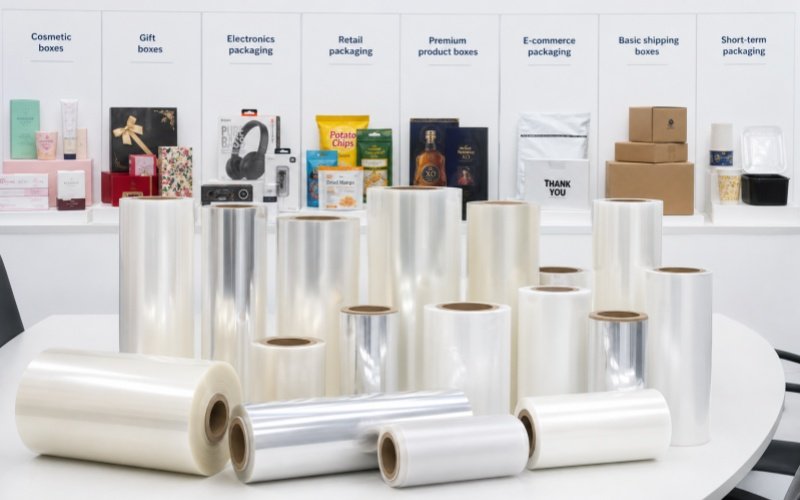
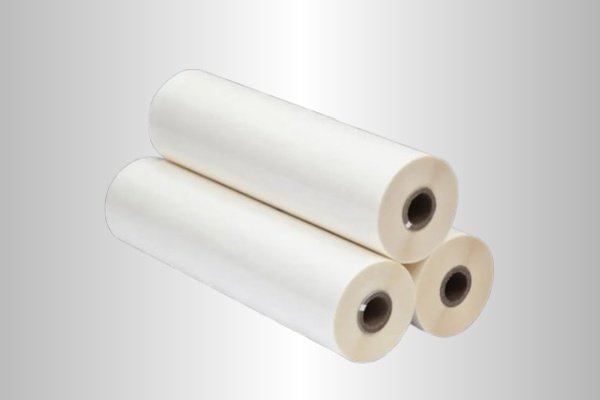
Packaging lamination means adding a thin film to the surface of printed packaging. The film creates an extra layer on top of the printed surface.
BOPP and PET are two common film materials used for lamination.
The film can change both the look and feel of the package. It can also help protect the printed surface from daily wear.
Different films offer different results. Some give a smooth look. Some give a soft feel. Others focus on scratch or fingerprint resistance.
So, lamination is not just about making packaging look better. It can also add useful surface protection.
Why Do Companies Laminate Packaging?
The main reason to laminate packaging is to protect the surface and improve the user experience.
Printed packaging can face many problems during production, shipping, storage, and use.
The surface may get scratched. Fingerprints may appear. Dust and dirt may stick to the surface. The printed design may also lose its clean look after repeated handling.
A suitable film can help reduce these problems.
Here are some common benefits.
1. Lamination Can Improve Scratch Resistance
A laminated surface can help protect packaging from everyday scratches.
This is useful for products that go through many steps before reaching the customer.
Packaging may be packed, moved, stacked, shipped, and placed on a shelf. These steps can create surface marks.
For dark packaging, even small scratches can be easy to see.
If scratch resistance is important, an anti-scratch film may be a good choice.
Looking for a film for high-contact packaging? Explore our anti-scratch film options.
2. Lamination Can Help Reduce Fingerprints
A special film can help keep packaging cleaner after handling.
Fingerprints are easy to see on some smooth and dark surfaces.
This can be a problem for cosmetic boxes, electronics packaging, gift boxes, and other premium products.
An anti-fingerprint film can help reduce visible fingerprints.
This can help the package keep a cleaner look during display and use.
3. Lamination Can Improve the Look
Lamination can change how your packaging looks.
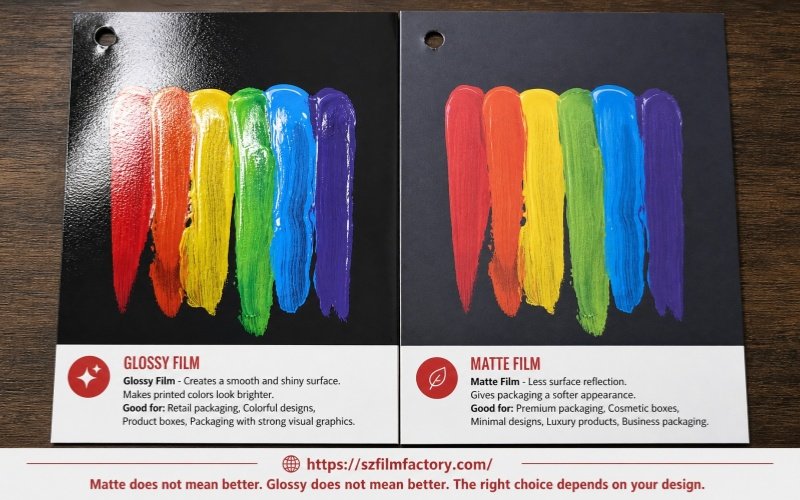
A glossy film can create a bright and clear surface. It can make colors look more vivid.
A matte film gives a softer look. It also reduces surface reflection.
The right finish depends on your brand style.
A bright package may work well with a glossy finish. A premium or simple design may work better with a matte finish.
4. Lamination Can Improve the Feel
The right film can make packaging feel more premium.
Consumers do not only see packaging. They also touch it.
A soft touch film can create a smooth and soft surface. This can make the package feel more comfortable and refined.
This type of film is often useful for premium boxes, cosmetic packaging, gift packaging, and high-end product packaging.
If surface feel is important to your brand, take a look at our soft touch film.
Which Packaging Needs Lamination?
Packaging that is often handled or needs a premium surface is more likely to benefit from lamination.
Here is a simple guide:
| Packaging Type | Is Lamination Worth Considering? | Main Reason |
|---|---|---|
| Cosmetic boxes | Yes | Appearance and surface protection |
| Gift boxes | Yes | Premium look and feel |
| Electronics packaging | Often | Scratch and handling protection |
| Retail packaging | Often | Better shelf appearance |
| Premium product boxes | Yes | Better surface and user experience |
| E-commerce packaging | Depends | Shipping and cost requirements |
| Basic shipping boxes | Not always | Protection may be the main goal |
| Short-term packaging | Not always | Lower need for surface protection |
The key question is not “Does every package need lamination?” but “What does my package need to do?”
If the package only needs to carry a product from one place to another, lamination may not be necessary.
If the package is part of the product experience, lamination may offer more value.
When Does Packaging Not Need Lamination?
You may not need lamination if your packaging has low surface protection needs and a short use cycle.
For example, some shipping cartons are opened soon after delivery. The outside appearance may not be very important.
In this case, lamination may add cost without adding much value.
Lamination may also not be needed if you want a natural paper look.
Some brands prefer the texture of uncoated paper. They may choose to keep the paper surface visible.
So, skipping lamination is not always a bad choice.
The best option depends on the purpose of the packaging.
BOPP vs. PET: Which Film Should You Choose?
BOPP and PET are both useful packaging films, but they are not the same.
The right choice depends on your packaging and production needs.
BOPP Film
BOPP is a common choice for packaging lamination.
BOPP stands for Biaxially Oriented Polypropylene.
It offers good clarity and a good surface appearance. It can also work well with different surface finishes.
BOPP film can be used for many paper packaging applications.
It is a good option when you need a balance between appearance, protection, and cost.
PET Film
PET film is known for its strength and good dimensional stability.
PET stands for Polyethylene Terephthalate.
It can offer a firm and stable film structure. It is useful when the packaging needs stronger film performance.
PET can also be used in applications where surface quality and durability are important.
BOPP or PET?
There is no single best film for every package.
Choose the film based on:
- Packaging material
- Printing method
- Surface finish
- Required protection
- Production process
- Final use
- Target cost
If you are unsure, share your packaging details with us. We can help you compare the options.
Which Functional Film Is Right for Your Packaging?
Choose a functional film based on the problem you want to solve.
You do not always need a film with many functions.
Start with your main requirement.
Choose Soft Touch Film for a Better Feel
Soft touch film is a good choice when touch and premium feel are important.
It gives the surface a soft and smooth feel.
It can work well for:
- Cosmetic boxes
- Gift boxes
- Premium packaging
- Electronics packaging
- Luxury product packaging
If your packaging needs a more refined touch, soft touch film is worth considering.
Choose Anti-Scratch Film for Better Surface Protection
Anti-scratch film is useful when packaging faces frequent friction.
This is common during shipping and handling.
It can help the surface stay cleaner and reduce visible scratch marks.
It is a good option for packaging that needs stronger surface protection.
Choose Anti-Fingerprint Film for High-Touch Packaging
Anti-fingerprint film is useful when people often touch the package.
This is especially helpful for dark or smooth surfaces.
It can reduce visible fingerprint marks and help the packaging keep a cleaner appearance.
Glossy or Matte Lamination?
Choose glossy film when you want a bright and vivid look. Choose matte film when you want a softer and more refined look.
Glossy Film
Glossy film creates a smooth and shiny surface.
It can make printed colors look brighter.
It may work well for:
- Retail packaging
- Colorful designs
- Product boxes
- Packaging with strong visual graphics
If you want your packaging to stand out, glossy lamination can be a good choice.
Matte Film
Matte film has less surface reflection.
It gives packaging a softer appearance.
It can work well for:
- Premium packaging
- Cosmetic boxes
- Minimal designs
- Luxury products
- Business packaging
Matte does not mean better. Glossy does not mean better.
The right choice depends on your design.
How to Choose the Right Packaging Film
Start with the packaging problem, not the film name.
Ask these questions before choosing a film.
1. Will the package be handled often?
If yes, surface protection may be important.
Consider anti-scratch or anti-fingerprint film.
2. Does the package need a premium feel?
If yes, consider soft touch film or a matte finish.
3. Does the design need strong color and shine?
If yes, consider a glossy finish.
4. Does the package need to look clean after handling?
If yes, anti-fingerprint film may help.
5. Will the package face friction during shipping?
If yes, consider a film with better scratch resistance.
6. Is cost a major concern?
If yes, start with the basic protection you actually need.
Do not pay for functions that your packaging does not need.
Can One Film Offer More Than One Function?
Yes, some functional films can combine several surface benefits in one film solution.
For some packaging projects, one function is enough.
For others, you may want better touch, scratch resistance, and fingerprint resistance at the same time.
A multi-functional film can be considered in these cases.
For example, a package may need:
Soft feel + scratch resistance + fingerprint resistance
A multi-functional film can help meet several needs with one surface solution.
The best choice still depends on the actual packaging application.
A Simple Way to Decide If You Need Lamination
Use this simple rule: choose lamination when the added surface value is important to your packaging.
You can use the following checklist:
Need better scratch protection?
→ Consider anti-scratch film.
Need fewer visible fingerprints?
→ Consider anti-fingerprint film.
Need a soft and premium feel?
→ Consider soft touch film.
Need a bright and vivid look?
→ Consider glossy lamination.
Need a simple and elegant look?
→ Consider matte lamination.
Need several surface functions?
→ Consider a multi-functional film.
Only need basic shipping protection?
→ Lamination may not be necessary.
This simple check can help you avoid both over-processing and under-protection.
Packaging Lamination FAQ
Does all packaging need lamination?
No. Not all packaging needs lamination.
The need depends on handling, appearance, protection, and cost.
Does lamination make packaging waterproof?
No. Lamination can improve water resistance, but it does not make all packaging fully waterproof.
The full packaging structure also matters.
Is BOPP good for packaging lamination?
Yes. BOPP is widely used for packaging lamination.
It offers good clarity and surface performance. It is suitable for many paper packaging applications.
Is PET better than BOPP?
Not always.
BOPP and PET have different properties. The better option depends on the application.
What film is best for luxury packaging?
Soft touch film or matte film can be a good choice for luxury packaging.
The final choice depends on the desired look and feel.
What film helps prevent fingerprints?
Anti-fingerprint film is designed for this purpose.
It can help reduce visible fingerprints on the packaging surface.
What film is best for scratch protection?
Anti-scratch film is a good option when surface durability is important.
It can help reduce visible marks caused by handling and friction.
Can lamination improve packaging appearance?
Yes. Lamination can change the look and feel of packaging.
Glossy film can create a bright surface. Matte and soft touch films can create a more premium look.
Final Answer: Does Your Packaging Need Lamination?
Your packaging needs lamination when surface protection, appearance, or feel adds real value to the product.
You may not need it for every package.
For basic shipping boxes, lamination may not be necessary.
For premium boxes, retail packaging, cosmetic packaging, and products that are often handled, lamination can be a useful upgrade.
The best film also depends on your goal.
Choose BOPP or PET based on the application. Choose anti-scratch film for surface protection. Choose anti-fingerprint film for cleaner surfaces. Choose soft touch film for a better feel.
At Shunzhan New Materials, we focus on BOPP and PET films for packaging and other surface applications. Our film range includes soft touch film, anti-scratch film, anti-fingerprint film, and multi-functional film solutions.
If you are still not sure whether your packaging needs lamination, tell us about your packaging, surface, and application. Our team can help you find a suitable film solution.
You can email us at info@szfilmfactory.com or use our contact form to get some samples.
Choose the film based on your packaging needs. Not just the appearance.