
BOPP film wrinkling usually happens because of uneven tension, incorrect machine settings, poor roller conditions, or unsuitable film quality. Operators can reduce wrinkles by checking production parameters, improving equipment control, and choosing stable BOPP film materials.
BOPP film is widely used in packaging, printing, and lamination. However, wrinkles can affect appearance, printing quality, and production efficiency. Understanding the causes helps operators solve problems faster.
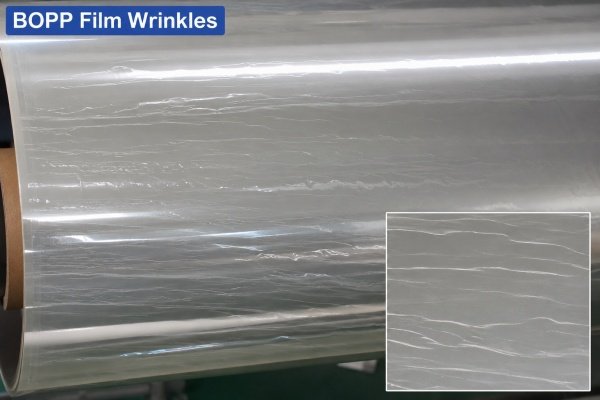
What Causes BOPP Film Wrinkles During Production?
BOPP film wrinkles are mainly caused by tension imbalance, temperature changes, and machine conditions.
During processing, BOPP film needs stable movement through rollers and equipment. If the film is stretched unevenly, it can create waves, folds, or wrinkles.
Common causes include:
- Incorrect tension settings
- Uneven roller pressure
- Wrong processing temperature
- Poor film flatness
- Contaminated rollers
- Improper storage conditions
Finding the exact cause is the first step to improving production quality.
Need stable BOPP film for your production line? Contact Shunzhan New Materials for support.
Tip 1: Check Film Tension Settings
Correct tension control is the first step to preventing BOPP film wrinkles.
BOPP film needs consistent tension during unwinding, printing, coating, and laminating.
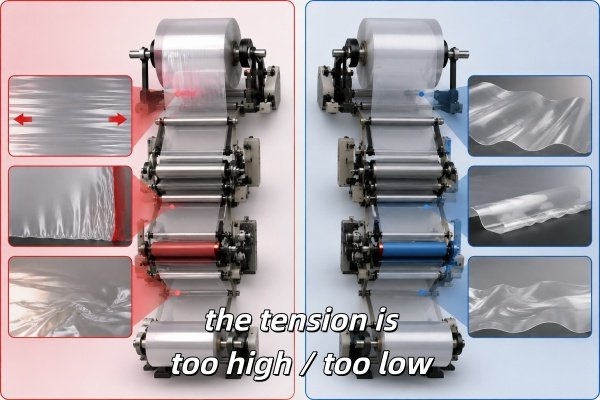
If the tension is too high:
- The film may stretch too much
- Edge wrinkles may appear
- Film deformation can happen
If the tension is too low:
- The film may move unevenly
- Loose areas may create wrinkles
Operators should check tension settings regularly and adjust them based on film thickness and machine speed.
Tip 2: Check Roller Pressure and Alignment
Proper roller pressure keeps BOPP film flat during processing.
Rollers play an important role in film transportation. Uneven pressure can create wrinkles on one side or across the whole film surface.
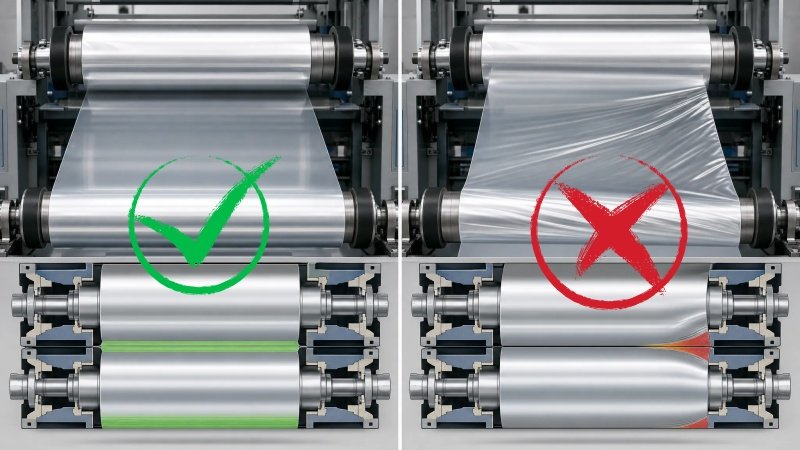
Operators should inspect:
- Roller alignment
- Roller surface condition
- Pressure balance
- Mechanical wear
Dirty or damaged rollers can also cause unstable film movement.
Regular equipment maintenance can reduce unnecessary production problems.
Tip 3: Control Processing Temperature
Stable temperature control helps maintain BOPP film flatness.
Temperature changes can affect film behavior during printing, coating, and lamination.
If the temperature is too high:
- Film may become softer
- Stretching can increase
- Wrinkles may appear
If the temperature is too low:
- Film may not process smoothly
- Adhesion performance may decrease
Operators should follow equipment recommendations and adjust temperature based on the specific BOPP film type.
Tip 4: Check BOPP Film Quality Before Production
Film quality directly affects wrinkle performance.
Not all BOPP films have the same flatness, thickness consistency, and mechanical performance.
Low-quality or unstable film may cause:
- Uneven stretching
- Poor feeding performance
- More production waste
Before production, operators should check:
- Film thickness
- Roll appearance
- Surface condition
- Storage condition
- Film edge quality
A stable film supplier can reduce many production issues.
Shunzhan New Materials provides reliable BOPP film solutions for printing, packaging, and lamination applications.
Tip 5: Improve Storage and Handling Conditions
Proper storage prevents BOPP film problems before production starts.
BOPP film can be affected by humidity, temperature changes, and incorrect handling.
Recommended storage practices include:
- Keep rolls in a dry environment
- Avoid direct sunlight
- Prevent heavy impact on rolls
- Keep packaging materials protected
Before use, allow the film to adapt to the production environment when needed.
Good handling reduces the chance of wrinkles during processing.
How Operators Can Quickly Identify the Wrinkle Problem
A simple inspection process helps operators find the cause faster.
Different wrinkle patterns usually show different problems.
| Wrinkle Type | Possible Cause |
|---|---|
| Edge wrinkles | Uneven tension or roller pressure |
| Middle wrinkles | Poor tension control |
| Random wrinkles | Film quality or equipment issues |
| Wave shape wrinkles | Temperature or alignment problems |
This basic diagnosis can help reduce downtime and improve production efficiency.
How Shunzhan New Materials Helps Reduce BOPP Film Wrinkle Issues
Stable BOPP film quality helps manufacturers improve production performance.
SZ Film Factory supplies BOPP film with controlled production processes and consistent quality.
Our BOPP film solutions support:
- Flexible packaging
- Printing applications
- Lamination processes
- Label production
We focus on helping customers reduce production problems and achieve stable results.
Contact Shunzhan New Materials to discuss your BOPP film requirements.
Choose the Right BOPP Film Supplier
High-quality base film resists wrinkling better. SZ Film Factory produces consistent BOPP film with tight gauge control and strong properties. Our materials run smoothly on your lines and cut troubleshooting time.
Contact Shunzhan New Materials for wrinkle-free BOPP solutions. Email us at info@szfilmfactory.com or fill out the contact form on our website. Our team offers fast technical support, custom film grades, and production advice. Start your next smooth run today—reach out now and reduce defects.
Frequently Asked Questions About BOPP Film Wrinkling
Q1: Why does BOPP film wrinkle during lamination?
BOPP film may wrinkle during lamination because of uneven tension, incorrect temperature, or unstable adhesive conditions.
Q2: Can machine settings cause BOPP film wrinkles?
Yes. Incorrect tension, roller pressure, and alignment are common reasons for wrinkles.
Q3: Does BOPP film quality affect wrinkles?
Yes. Film thickness consistency, flatness, and mechanical properties can influence production performance.