
BOPP Film Defect Quick Diagnosis
Different BOPP defects usually point to different process areas, so a quick first check can save troubleshooting time.
| BOPP Film Defect | First Check | Second Check | Third Check |
|---|---|---|---|
| Fish Eyes / Gel Defects | Extrusion Temperature | Filter Screen | Raw Material / Recycled Material |
| Thickness Variation | Die Gap | Chill Roll Temperature | Stretching Temperature |
| Streaks | Die Lip | Chill Roll | Stretching Roll Cleanliness |
| Low Corona Level | Corona Power | Slip Additive Migration | Storage Time |
| Stretching Break | Stretching Temperature | Stretch Ratio | Raw Material / Contamination |
| High Haze | Chill Roll Cooling | Stretching Temperature | Heat Setting Temperature |
| High Shrinkage | Heat Setting | Stretch Ratio | Winding Tension |
| Slip Additive Migration | Additive Level | Storage Temperature | Storage Time |
This table is a quick reference for the wider BOPP common defect topic. This page focuses on the first item: fish eyes in BOPP film.
What Are Fish Eyes in BOPP Film?
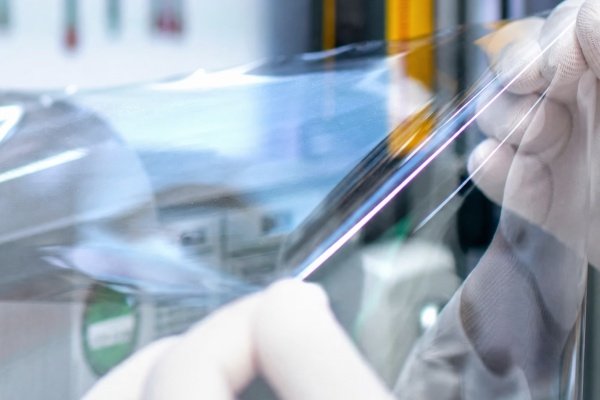
Fish eyes are small hard, clear or semi-clear spots that look different from the surrounding film. They may look like tiny crystals under light. Some defects can also be felt as small raised points on the film surface.
The key feature of a fish eye is that the material does not blend into the film in the same way as the normal polymer. The defect may come from unmelted material, degraded polymer, contamination or poor dispersion.
Fish eyes are sometimes called gel defects in film production. The exact appearance can vary with the material, defect size and processing conditions.
What Causes Fish Eyes in BOPP Film?
The most important causes are unstable extrusion, poor raw material quality, ineffective filtration and equipment wear. Checking these areas in the right order can make diagnosis much faster.
1. Incomplete Melting
Low or unstable extrusion temperature can leave some material insufficiently melted. PP pellets or other high-melting particles may not fully disperse into the polymer melt. These particles can later appear as hard spots in the finished BOPP film.
Temperature should be checked as a profile, not as one single number. A stable extrusion process helps maintain consistent melting and mixing.
2. Polymer Degradation and Gel Formation
Excessive heat or long residence time can create degraded or gel-like material. When polymer stays under unsuitable thermal conditions for too long, some material may become difficult to disperse.
A sudden increase in fish eyes can be a useful warning sign. It may indicate a change in temperature, residence time, material condition or equipment performance.
3. Raw Material and Recycled Material
Poor-quality or contaminated raw material can increase the risk of fish eyes. Recycled material may contain foreign particles, mixed PP grades or material with different processing behavior.
Material consistency is especially important for high-appearance BOPP film. Better control of the raw material stream helps improve melt stability.
4. Filter Screen Problems
The filter screen is a key barrier against unwanted particles in the polymer melt. A damaged, unsuitable or overloaded filter may allow contaminants or unmelted material to pass through.
Filter condition should be checked when fish eye levels rise unexpectedly. Screen damage and abnormal pressure behavior can both provide useful clues.
5. Extruder Wear
Worn extrusion components can reduce melting and mixing efficiency. When the screw or related components no longer provide stable material handling, the polymer may become less uniform.
Equipment condition is therefore part of fish eye control. Regular maintenance can help prevent small process problems from becoming film defects.
How to Quickly Diagnose Fish Eyes
A simple diagnosis should move from extrusion conditions to filtration, then to raw materials and equipment.
Check 1: Extrusion Temperature
Confirm that the extrusion temperature profile is stable and suitable for the PP grade being used.
Check 2: Filter Screen
Inspect the filter screen for damage, contamination and abnormal operating conditions.
Check 3: Raw Material
Check the PP grade, raw material cleanliness and recycled material ratio.
Check 4: Processing History
Look for recent changes in temperature, production speed, material batches or equipment settings.
Check 5: Extrusion Equipment
Inspect the screw and related components when the problem continues after the basic checks.
This step-by-step method helps separate material problems from process problems. It also reduces unnecessary changes to several production parameters at the same time.
How Fish Eyes Affect Functional Film Applications
Fish eyes can affect the appearance and surface quality of functional films, especially when the film is used for lamination or surface coating. A hard spot can create a small raised area and make the finished film look uneven.
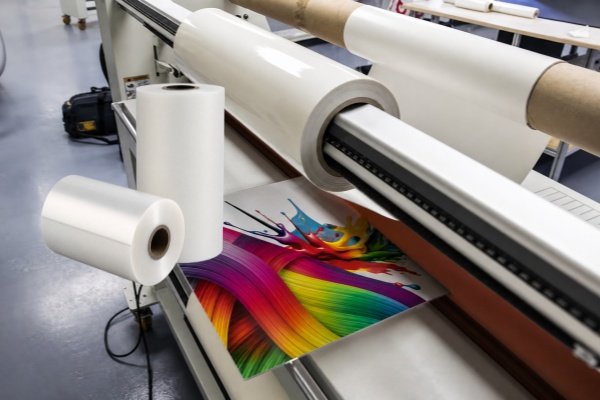
Fish eyes may also cause problems during lamination. When another film or substrate is laminated onto the BOPP film, a raised defect can reduce the uniformity of contact between the layers. This may lead to local air gaps, uneven adhesion or visible marks after lamination.
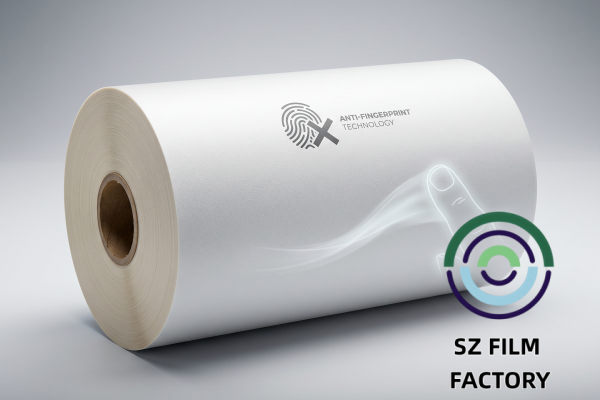
The impact is more obvious in high-appearance functional films. For products such as soft-touch film, anti-scratch film and anti-fingerprint film, surface uniformity is an important part of the final appearance and user experience.
Large or frequent fish eyes can also increase the risk of defects in downstream processing. They may affect coating uniformity, surface flatness and the visual quality of the finished functional film.
For functional film applications, a clean and uniform base film is essential. Contact Shunzhan New Materials to discuss your lamination or surface finishing requirements.

How to Reduce Fish Eyes in BOPP Film
Fish eye control depends on stable processing, clean materials and effective filtration. No single setting can solve every fish eye problem.
Keep extrusion conditions stable. Avoid unnecessary temperature changes and monitor the process when production conditions change.
Use controlled raw materials. Material consistency and proper recycled material management can reduce contamination risks.
Maintain effective filtration. The filter should match the production process and be checked regularly.
Maintain extrusion equipment. Screw wear and other equipment conditions can affect melt quality over time.
Use continuous inspection. Early detection makes it easier to isolate abnormal production conditions before larger quantities are affected.
Shunzhan New Materials: Quality Control Starts on the Production Line
At Shunzhan New Materials, film quality is controlled throughout production rather than checked only at the end. We specialize in BOPP and PET films and use full-process inspection to monitor product quality.
Products with identified defects are not released to the market. This quality approach helps reduce downstream risks for customers using our films for coating, printing, slitting and other converting applications.
Our product range includes functional BOPP and PET film solutions for different applications. Depending on the project, our products include soft-touch film, anti-scratch film, anti-fingerprint film, heat-sealable film, pearlized film and multifunctional films.
Need BOPP film with stable quality for adhesive tape or another converting application? Contact info@szfilmfactory.com for product information and technical support.
FAQ About Fish Eyes in BOPP Film
Are fish eyes the same as black spots?
No, not always. Fish eyes are commonly clear, semi-clear or gel-like defects. Black spots are more likely to indicate carbonized material, contamination or other dark foreign matter.
Can fish eyes be detected before coating?
Yes. Visual inspection and film inspection systems can help identify visible defects before coating. The detection method depends on the film specification and defect size.
Do fish eyes affect transparent BOPP film more?
They are usually more noticeable in clear film. Small optical defects can be easier to see when the film has high transparency.
Can fish eyes cause film breakage?
Large or concentrated defects can increase local stress and may contribute to breakage during stretching or converting. The actual risk depends on defect size, frequency and film processing conditions.
Does recycled material always cause fish eyes?
No. Recycled material does not automatically create fish eyes. The risk is more closely related to its cleanliness, consistency, compatibility and processing control.
Can better filtration completely eliminate fish eyes?
Not necessarily. Filtration can remove many unwanted particles, but fish eyes can also come from incomplete melting, polymer degradation or equipment-related issues.
Why are fish eyes important for BOPP adhesive tape film?
Because film defects can affect coating uniformity, appearance, slitting and final tape performance. Controlling defects at the film production stage helps reduce downstream processing problems.
What should a buyer ask a BOPP film supplier about fish eye control?
Ask about raw material control, filtration, in-line inspection, quality standards and how defective rolls are handled. These questions can provide a better view of the supplier’s actual quality-control system.