
BOPP Film Defect Quick Diagnosis
Different BOPP defects require different first checks, so identifying the most likely process area can speed up troubleshooting.
| BOPP Film Defect | First Check | Second Check | Third Check |
|---|---|---|---|
| Fish Eyes / Gel Defects | Extrusion Temperature | Filter Screen | Raw Material / Recycled Material |
| Thickness Variation | Die Gap | Chill Roll Temperature | Stretching Temperature |
| Streaks | Die Lip | Chill Roll | Stretching Roll Cleanliness |
| Low Corona Level | Corona Power | Slip Additive Migration | Storage Time |
| Stretching Break | Stretching Temperature | Stretch Ratio | Raw Material / Contamination |
| High Haze | Chill Roll Cooling | Stretching Temperature | Heat Setting Temperature |
| High Shrinkage | Heat Setting | Stretch Ratio | Winding Tension |
| Slip Additive Migration | Additive Level | Storage Temperature | Storage Time |
This table provides a quick reference for the wider BOPP common defect topic. This page focuses on thickness variation in BOPP film.
What Is Thickness Variation in BOPP Film?
Thickness variation means that the film thickness changes from one area to another instead of staying within the required range. The variation can occur across the film width, known as cross-machine direction variation, or along the production direction, known as machine direction variation.
A small thickness difference may not always be visible by eye, but it can become important during converting. The effect may appear later during coating, printing, slitting or packaging lamination.
Thickness consistency should be evaluated against the customer’s specification, not by a single universal limit. Different BOPP film applications require different thickness ranges and tolerances.
What Causes Thickness Variation in BOPP Film?
The main causes are uneven die settings, unstable cooling, stretching changes and unstable extrusion output. Winding conditions can also affect the final measured thickness and roll quality.
1. Uneven Die Gap
The die gap is one of the first places to check when thickness changes across the film width. An uneven T-die lip opening can create areas where more or less polymer flows through.
This can create a thicker and thinner pattern across the web. Proper die adjustment and process stability are important for maintaining a uniform film profile.
2. Uneven Chill Roll Temperature
Chill roll temperature can influence how the cast sheet cools and solidifies. When cooling is not uniform across the width, the structure of the cast sheet may also become uneven.
This initial variation can carry forward into the stretching process. A stable and uniform cooling condition is therefore important for the final thickness profile.
3. Unstable Stretching Conditions
Stretching changes the thickness of the film and can increase an existing thickness difference. Variations in longitudinal stretching, transverse stretching or temperature can produce uneven orientation and thickness.
Stretching conditions need to remain stable throughout production. Small changes in roll speed or temperature can have a larger effect on a thin film.
4. Unstable Extrusion Output
Uneven extrusion output can create thickness changes along the machine direction. Changes in screw speed, feeding rate or material flow can cause the amount of polymer entering the die to fluctuate.
Stable feeding and extrusion are important for a stable film profile. Production changes should be monitored when thickness variation appears suddenly.
5. Winding Tension
Excessive or unstable winding tension can influence the final roll condition and create additional dimensional variation. A film under uneven tension may be stretched differently during winding.
This is why winding should be checked when the film looks acceptable during production but shows problems after winding or storage.
How to Quickly Diagnose BOPP Film Thickness Variation
The fastest approach is to check the film profile and then trace the problem back through the extrusion and stretching process.
Check 1: Measure the Thickness Profile
Start with data rather than visual judgment. Measure thickness across the web width and along the machine direction to identify the pattern of variation.
Check 2: Inspect the Die Gap
Check the T-die when the variation mainly appears across the film width. Uneven lip opening or improper adjustment can directly affect polymer flow.
Check 3: Check Chill Roll Temperature
Review the temperature profile across the chill roll. Uneven cooling can create differences in the cast sheet before stretching.
Check 4: Check Stretching Conditions
Review stretching temperature, roll speed and stretch ratio. Any recent process change may help identify the cause.
Check 5: Check Extrusion and Winding
Check extruder output, feeding stability and winding tension when the problem runs along the machine direction. Comparing production records with thickness measurements can help isolate the source.
How Thickness Variation Affects Packaging Lamination
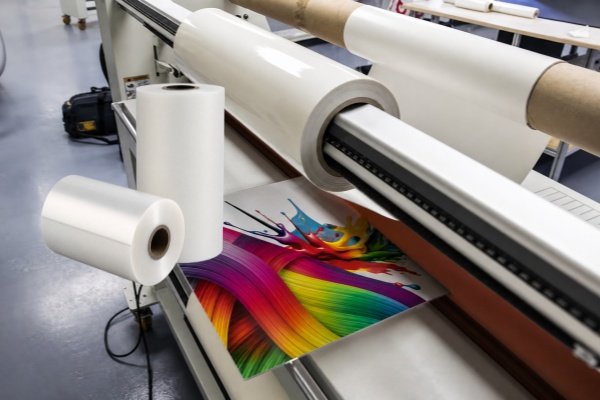
Uneven BOPP film thickness can affect the uniformity and stability of packaging lamination. When the base film thickness changes, the finished laminated structure may also have local differences in thickness and appearance.
Thickness variation can make coating and adhesive application less consistent. During lamination, the substrate should provide a stable and uniform surface. Large local thickness differences can make process control more difficult.
The finished packaging film may also show uneven appearance or handling behavior. Depending on the structure, thickness differences can influence flatness, stiffness and the overall feel of the laminated material.
Material usage is another important concern. Areas that are too thick increase material consumption, while areas that are too thin may reduce the expected mechanical or functional performance.
For high-quality packaging lamination, thickness consistency is part of overall film quality. A stable base film helps converters maintain more consistent downstream processing.
Looking for BOPP film for packaging lamination? Explore our BOPP functional film solutions for different surface and packaging requirements.
How to Reduce Thickness Variation in BOPP Film
Good thickness control requires stability from extrusion through stretching and winding. Adjusting only one process parameter may not solve the problem when several factors are linked.
Keep the die profile stable. Regular die inspection and proper lip adjustment help maintain consistent polymer flow.
Keep cooling conditions uniform. A stable chill roll temperature profile can reduce variation in the cast sheet.
Control stretching conditions carefully. Stable temperatures, roll speeds and stretch ratios help prevent variation from becoming larger during biaxial stretching.
Keep extrusion output stable. Consistent feeding and screw speed help maintain a steady polymer flow.
Control winding tension. Stable winding conditions help reduce unwanted stretching and roll-to-roll dimensional differences.
Use continuous quality inspection. In-process measurement makes it easier to identify changes early and prevent non-conforming film from moving to the next stage.
Shunzhan New Materials: Full-Process Quality Inspection
At Shunzhan New Materials, film quality is checked throughout production rather than only at final shipment. We specialize in BOPP and PET films and focus on stable film performance for downstream applications.
Products with quality defects are not released to the market. Our production and inspection process is designed to identify abnormal conditions and reduce the risk of defective material reaching customers.
Consistent thickness is especially important for films used in lamination and functional surface applications.

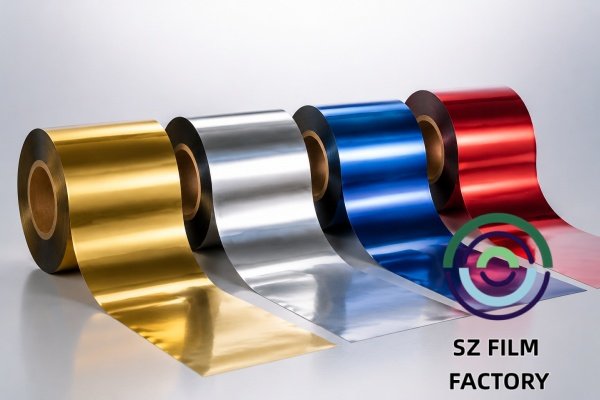
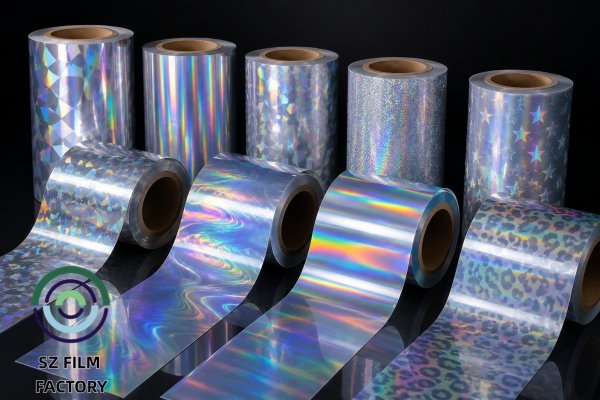
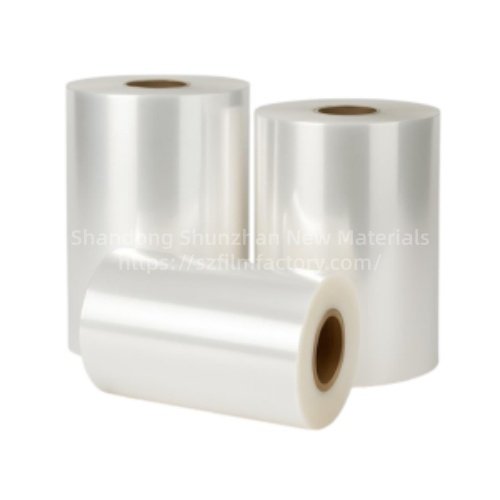
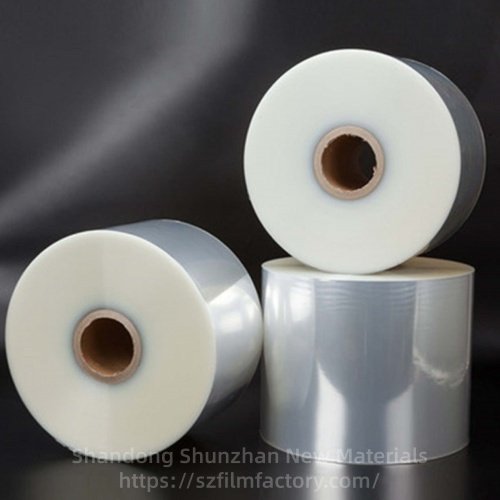
Need a BOPP film with controlled thickness for packaging lamination? Contact info@szfilmfactory.com with your required thickness, application and roll specifications.
FAQ About BOPP Film Thickness Variation
What is the difference between machine direction and cross-machine direction thickness variation?
Machine direction variation occurs along the production direction, while cross-machine direction variation occurs across the film width. The two patterns can point to different process causes.
Can thickness variation be seen with the naked eye?
Not always. Small thickness differences may not be visually obvious, which is why thickness measurement is important for quality control.
Does film thickness affect packaging lamination?
Yes. Thickness can influence coating, lamination stability, final structure thickness, flatness and material consumption.
Can a thicker BOPP film improve packaging performance?
Not necessarily. A suitable thickness depends on the application and film structure. Increasing thickness alone does not guarantee better overall performance.
Why does thickness variation sometimes become worse after stretching?
Stretching changes the thickness and orientation of the cast sheet. If the initial sheet is uneven or the stretching conditions are unstable, the final variation can become more noticeable.
Does higher winding tension always cause thickness problems?
No. Winding tension needs to be properly controlled for the film and roll structure. Excessive or unstable tension can create dimensional and roll-quality problems.
What should buyers check when sourcing BOPP film?
Buyers should check thickness tolerance, thickness profile, roll quality, inspection standards and the supplier’s handling of non-conforming products. These details can provide a better indication of production consistency.
Is thickness tolerance the same for all BOPP films?
No. The suitable tolerance depends on the film grade, thickness, production process and end application. Packaging lamination, printing and functional films may have different requirements.