
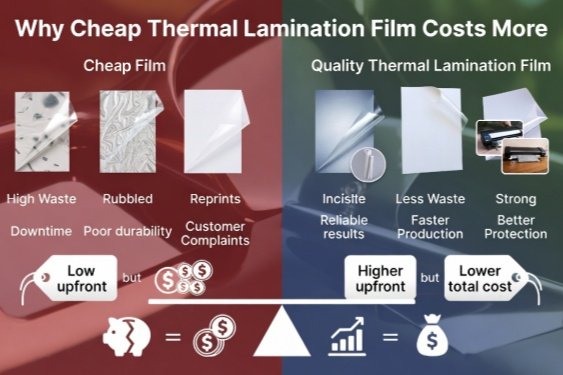
Many cheap thermal lamination films are less expensive because they are thinner. A thicker thermal lamination film, such as 23μm, 25μm, or 28μm, provides better protection, more stable lamination, and fewer production problems. Although the unit price is higher, the total production cost is often lower because there is less waste, fewer customer complaints, and better product quality.
What Makes One Thermal Lamination Film Cheaper Than Another?
The biggest reason is thickness.
Many suppliers reduce the total thickness of the film to lower material costs. At first glance, the price looks attractive. However, thinner films usually offer less protection and may create more challenges during production.
A lower purchase price does not always mean better value.
When comparing thermal lamination films, buyers should evaluate:
- Film thickness
- Bonding performance
- Surface protection
- Production stability
- Total cost after lamination
Quick Answer
Why is some thermal lamination film cheaper?
In many cases, cheaper thermal lamination film is thinner. Thinner films use less raw material, reducing the selling price. However, they may provide lower protection, weaker stiffness, and higher production risks.
Looking for a film that balances cost and performance? Contact Shunzhan New Materials for professional recommendations.
Why Thickness Matters More Than Many Buyers Think
Thickness directly affects product quality.
Thermal lamination film is not only a decorative layer. It protects printed materials during transportation, storage, and daily use.
A thicker film generally provides:
- Better scratch resistance
- Higher stiffness
- Improved protection against bending
- Better appearance after lamination
- Longer product life
This is especially important for:
- Luxury packaging
- Book covers
- Premium brochures
- Gift boxes
- Cosmetic packaging
- Food packaging
If the finished product looks better and lasts longer, your customers notice the difference.
Why Shunzhan New Materials Produces 23μm, 25μm, and 28μm Thermal Lamination Films
Different applications need different levels of protection.
At Shunzhan New Materials, we manufacture thermal lamination films in three popular thicknesses:
| Thickness | Best For | Main Advantage |
|---|---|---|
| 23μm | Books, catalogs, brochures | Good balance between protection and cost |
| 25μm | Premium packaging, commercial printing | Better stiffness and durability |
| 28μm | Luxury packaging and products requiring extra protection | Maximum strength and premium appearance |
Instead of making the thinnest possible film, we focus on helping customers produce higher-quality finished products.
This approach reduces long-term production risks.
Not sure which thickness fits your project? Email info@szfilmfactory.com for free technical advice.
A Higher Film Price Can Reduce Your Total Production Cost
The cheapest film is not always the lowest-cost solution.
Many production costs happen after the film is purchased.
If the film is too thin, manufacturers may experience:
- More damaged products during shipping
- More scratches
- More customer complaints
- Higher reject rates
- More machine adjustments
- Lower production efficiency
A slightly higher film cost can reduce these hidden expenses.
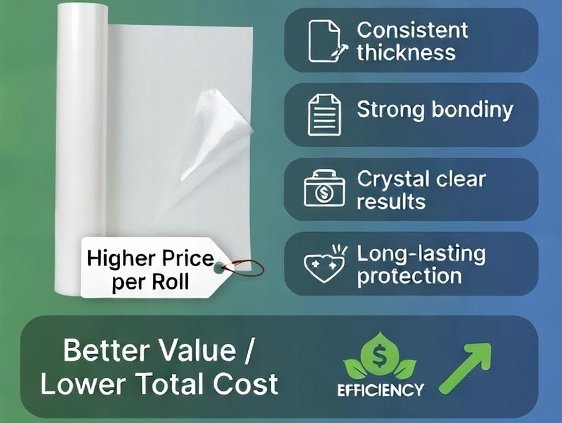
This is why experienced packaging manufacturers often focus on total cost of ownership, not just material price.
Quick Answer
Does thicker thermal lamination film save money?
Yes. Although thicker thermal lamination film usually costs more per roll, it can reduce production waste, improve product durability, lower complaint rates, and reduce overall manufacturing costs.
Better Lamination Stability Means Better Productivity
Stable production saves both time and money.
Consistent film thickness helps operators maintain stable machine settings.
This brings several benefits:
- Smoother lamination
- More consistent bonding
- Less downtime
- Fewer wrinkles
- Fewer bubbles
- More predictable production
Production stability becomes even more important during large-volume orders.
Reliable materials help factories meet delivery schedules with confidence.
Choosing Thermal Lamination Film Should Focus on Value, Not Just Price
The right film supports your brand reputation.
Your customers usually do not ask how much your lamination film costs.
They notice:
- Product quality
- Surface finish
- Durability
- Professional appearance
Investing in better lamination film helps create products that customers remember.
For premium packaging, books, printed marketing materials, and branded products, choosing the right thickness often delivers a better return than choosing the lowest price.
Choose Thermal Lamination Film Based on Performance, Not Just Price
A slightly higher-quality film can deliver much greater value over the life of your product. At Shunzhan New Materials, we believe thermal lamination film should improve production efficiency, protect your printed materials, and strengthen your brand image—not simply lower the purchase price.
Whether you need 23μm, 25μm, or 28μm thermal lamination film, our team can help you select the right solution for your application.
📧 Email us at info@szfilmfactory.com to discuss your project, request samples, or receive technical recommendations. You can also Contact Us through our online inquiry form, and our specialists will respond as soon as possible.
Frequently Asked Questions
Is thicker thermal lamination film always better?
Not always. The ideal thickness depends on your product. A brochure may only need 23μm, while luxury packaging may benefit from 28μm.
Why do some suppliers offer much cheaper prices?
Many lower-priced films are thinner or designed for basic applications. Lower raw material usage reduces the selling price but may also reduce protection and durability.
What thickness does Shunzhan New Materials produce?
Shunzhan New Materials manufactures thermal lamination films in 23μm, 25μm, and 28μm, covering many commercial printing and packaging applications.
How do I choose the right thickness?
Choose based on your product, printing process, handling conditions, and protection requirements. If you are unsure, our technical team can recommend the most suitable option.