
BOPP Film Defect Quick Diagnosis
When corona treatment is low, start with the treatment system and then check the film surface and storage conditions.
| BOPP Film Defect | First Check | Second Check | Third Check |
|---|---|---|---|
| Fish Eyes / Gel Defects | Extrusion Temperature | Filter Screen | Raw Material / Recycled Material |
| Thickness Variation | Die Gap | Chill Roll Temperature | Stretching Temperature |
| Streaks | Die Lip | Chill Roll | Stretching Roll Cleanliness |
| Low Corona Level | Corona Power | Slip Additive Migration | Storage Time |
| Stretching Break | Stretching Temperature | Stretch Ratio | Raw Material / Contamination |
| High Haze | Chill Roll Cooling | Stretching Temperature | Heat Setting Temperature |
| High Shrinkage | Heat Setting | Stretch Ratio | Winding Tension |
| Slip Additive Migration | Additive Level | Storage Temperature | Storage Time |
This table is part of the wider BOPP common defect topic. This page focuses on low or rapidly decreasing corona treatment.
What Is Corona Treatment on BOPP Film?
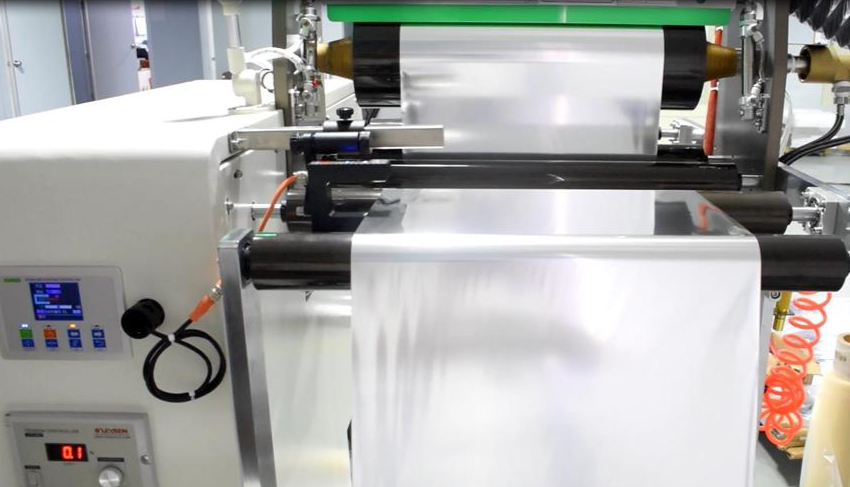
Corona treatment increases the surface energy of BOPP film so that coatings, inks and adhesives can wet and bond to the film more effectively. Untreated PP has relatively low surface energy, which makes direct coating or printing difficult.
Corona treatment creates a more active film surface. This improves the interaction between the film and the material applied to it.
The exact required surface energy depends on the application and coating system. A commonly used reference for treated BOPP film is around 38 dynes/cm or higher, but the actual requirement should be confirmed with the customer’s coating, ink or adhesive system.
Why Does BOPP Corona Treatment Become Low?
Low corona treatment can be caused by the treatment process itself or by changes on the film surface after treatment.
1. Insufficient Corona Power
Insufficient treatment power is one of the first things to check when the initial corona level is already too low. Power, line speed, electrode condition and the treatment gap can all affect the treatment result.
A production line running too fast with insufficient treatment energy may produce a lower surface energy. The treatment system should therefore be matched to the film and production speed.
2. Unsuitable Electrode or Treatment Conditions
The electrode and treatment gap need to remain stable for consistent treatment. Contamination, wear or an unsuitable gap can reduce treatment efficiency.
A stable corona system helps maintain a more uniform surface across the film width.
3. Slip Additive Migration
Slip additives can migrate toward the film surface and reduce the measured surface energy over time. Additives such as erucamide are often used to improve film slip, but excessive migration can create a surface layer that interferes with coating and bonding.
This is one reason a film may pass the corona test shortly after production but show a lower value later.
4. Excessive Slip Additive Level
Too much slip additive can increase the risk of surface migration. The right additive level depends on the film formulation and required surface properties.
Functional BOPP film needs a balance between slip performance and surface treatment stability. Increasing additive content without considering the final application can create downstream problems.
5. Long Storage Time
Corona treatment can gradually decrease during storage. The treated surface changes over time, while additives may continue to move toward the surface.
This means production date and storage conditions can be important when evaluating corona performance.
6. High Storage Temperature
High storage temperature can accelerate additive migration and surface changes. Films stored under excessive heat may show a faster reduction in surface energy.
Good storage conditions are therefore part of corona treatment control, not only a logistics issue.
Why Does BOPP Corona Treatment Drop After Storage?
The most common reason is that the film surface changes after treatment. The corona-treated surface is not completely static.
Slip additives can gradually migrate from the film bulk to the surface. This can create a thin surface layer that reduces the effectiveness of the treated surface.
Storage temperature can influence the speed of this process. Higher temperatures may accelerate migration and surface changes.
For this reason, corona level should be evaluated at the time that matters for the customer’s process. A film intended for later coating or packaging lamination may need storage and shelf-life requirements to be considered during qualification.
How to Quickly Diagnose Low Corona Treatment
The easiest diagnosis is to compare the initial corona value with the value after storage and then trace the change to process or surface conditions.
Check 1: Measure the Corona Level
Start with a reliable surface energy measurement. Check both sides when necessary and use consistent testing conditions.
Check 2: Review Corona Power and Line Speed
Check whether the treatment energy is suitable for the current production speed. Review recent changes in power, speed or electrode condition.
Check 3: Inspect the Film Surface
Look for signs of additive migration or surface contamination. A visible surface deposit can be an important clue.
Check 4: Check Raw Material and Additives
Review the slip additive type and addition level. Changes in formulation can affect both slip performance and corona stability.
Check 5: Compare Storage Conditions
Compare corona values at different storage times and temperatures. This can help determine whether the main problem is treatment efficiency or post-treatment surface migration.
How Low Corona Treatment Affects Packaging Lamination
Low corona treatment can reduce the ability of BOPP film to accept coatings, inks or adhesive layers during packaging lamination. When surface energy is too low, the applied material may not wet the film surface properly.
Poor wetting can lead to uneven coating or weak interfacial bonding. The final laminated structure may show local adhesion problems or reduced bond strength.
The problem can also become visible during longer storage or later converting. A film with good initial corona treatment may become harder to process if the surface energy falls before lamination begins.
This is especially important for functional films used as part of a packaging structure. Films with special surface properties need both the required functional effect and suitable surface compatibility with the next processing layer.
Stable corona treatment helps converters achieve more consistent coating and lamination results.
Need BOPP film for packaging lamination with stable surface treatment? Contact SZ Film Factory to discuss your coating system, lamination process and required surface energy.
How to Improve Corona Treatment Stability
Good corona performance depends on both treatment conditions and film formulation.
Use suitable corona power and line speed. Treatment energy should match the film structure and production conditions.
Keep the treatment system clean and stable. Electrode condition and treatment gap can affect uniformity.
Control slip additive levels. The formulation should provide the required slip performance without creating excessive surface migration.
Control storage conditions. Avoid unnecessary heat and consider storage time when setting corona specifications.
Test corona performance over time. Measuring only immediately after production may not show the actual surface condition at the customer’s converting stage.
Shunzhan New Materials: Full-Process Film Quality Control
At Shunzhan New Materials, corona treatment is considered part of overall film quality rather than an isolated production parameter. We specialize in BOPP and PET films for functional and converting applications.
Our production lines use full-process inspection, and defective products are not released to the market. This approach helps reduce the risk of quality problems appearing later during coating, printing or packaging lamination.
Our product range includes functional films such as soft-touch film, anti-scratch film, anti-fingerprint film and multifunctional films. Film structures can be selected according to surface requirements and downstream processing needs.
Looking for BOPP film with stable surface treatment for packaging lamination? Send your requirements to info@szfilmfactory.com and our team can help review the suitable film solution.
FAQ About BOPP Corona Treatment
What does the dyne level of BOPP film mean?
The dyne level is a way to describe the surface energy of the film. It is commonly used to evaluate whether a surface is suitable for coating, printing or bonding.
Is a higher dyne level always better?
Not necessarily. The required surface energy depends on the coating, ink or adhesive being used. The goal is suitable and stable surface properties, not simply the highest possible value.
Can corona treatment improve BOPP adhesion permanently?
No. Corona treatment can improve surface properties, but the effect can change over time because of surface aging and additive migration.
How long can corona-treated BOPP film be stored?
There is no single storage period that applies to every BOPP film. The usable period depends on film formulation, treatment level, storage temperature, packaging and the final application.
Can a film with low corona treatment still be laminated?
It may be possible, but the result depends on the lamination system and the actual surface condition. Low surface energy can make wetting and bonding more difficult.
Why can two BOPP films with the same corona value perform differently?
Corona value is only one part of surface performance. Film formulation, additive migration, surface cleanliness, coating chemistry and storage history can also affect the final result.
Can anti-scratch or anti-fingerprint BOPP film be corona treated?
It depends on the film structure and intended surface. Functional surface layers and treatment systems need to be designed together so that the required surface effect is maintained.
How should BOPP film be stored to protect corona performance?
Film should be stored in suitable environmental conditions and protected from excessive heat and contamination. Storage time should also be considered when the film will be used for later coating or lamination.