
Recyclability is becoming a key requirement in flexible packaging, but sustainable packaging must also perform. The industry is moving toward packaging structures that are easier to recycle while still providing barrier protection, print quality, durability, and efficient processing. This is why “Performance + Sustainability” is becoming an important direction for packaging films around LOUPE Americas 2026.
Recyclability Is Becoming a Packaging Priority
Packaging recyclability is no longer only a material choice; it is becoming part of product design. Brand owners and converters are looking for films and structures that can support better end-of-life options without sacrificing the performance required during packaging production and use.
This trend is driving interest in recyclable structures, mono-material packaging, fiber-based solutions, thinner films, and lower-impact coatings. It also puts more attention on how each layer of a packaging structure affects recycling.
For film manufacturers, the challenge is clear: a sustainable film still needs to work on real production lines.
Performance + Sustainability: The New Packaging Balance
The next generation of sustainable packaging needs to solve two problems at the same time: environmental impact and technical performance.
A packaging film may need to provide:
- Good printability and ink adhesion
- High surface quality
- Scratch and scuff resistance
- Suitable barrier performance
- Heat-sealing or converting compatibility
- Stable processing performance
- Lower material consumption
- Better recyclability or end-of-life options
This is particularly important for BOPP and PET films used in labels, flexible packaging, lamination, and other printed applications.
Sustainability without performance can create production problems. Performance without considering recyclability can create challenges for the future of packaging.
BOPP Films and the Move Toward More Sustainable Structures
BOPP films remain an important material platform as converters explore lighter and more recyclable packaging structures. Their combination of strength, clarity, surface properties, and processing flexibility makes BOPP suitable for many packaging and printing applications.
At the same time, film development is moving toward new solutions that can reduce environmental impact.
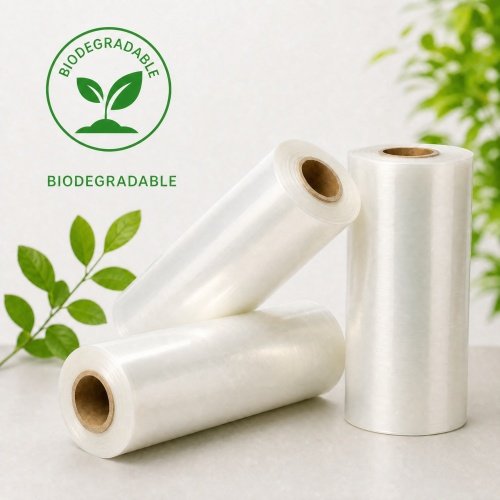
For example, biodegradable BOPP film is one area of development for packaging applications that require an alternative approach to conventional film materials. The exact environmental benefit depends on the film formulation, application, disposal conditions, and relevant certification.
At Shandong Shunzhan New Materials, we manufacture BOPP and PET films and provide biodegradable BOPP film for customers looking for more sustainable material solutions.
[Explore our BOPP film solutions →]
Functional Barriers Still Matter
Recyclability does not remove the need for functional performance. Food, consumer goods, and industrial packaging may require protection against moisture, oxygen, grease, abrasion, or other external factors.
This is where functional coatings and barrier technologies become important. A more sustainable packaging structure still needs to protect the product throughout its intended shelf life and distribution cycle.
Converters should therefore look beyond the word “recyclable” and ask practical questions:
- What is the actual barrier performance?
- Is the film suitable for the intended printing process?
- Does it maintain stable adhesion during lamination?
- Can it run efficiently on existing equipment?
- Is the structure compatible with the target recycling stream?
The right sustainable film is one that meets both environmental and production requirements.
Eco-Friendly Release Films for More Efficient Production
Sustainability also extends beyond the final package to the materials used during manufacturing. Release films can support processes where controlled release, surface quality, and processing stability are important.
Shandong Shunzhan New Materials also supplies eco-friendly release film solutions for applications that require reliable release performance while supporting customers’ environmental goals.
This reflects a broader industry shift: sustainability is increasingly being considered across the entire production process, not only at the end of a package’s life.
[Talk to our film team about your release film requirements →]
Digitalization Can Also Support Sustainable Packaging
Automation and digital production can reduce waste as well as improve efficiency. Short-run digital printing, automated inspection, accurate color management, and better production control can reduce setup waste, defective products, and unnecessary material consumption.
For converters, this creates a broader definition of sustainable manufacturing. The goal is not simply to choose a greener material. It is to build a process that uses less material, less energy, and fewer resources while maintaining consistent quality.
This is also why recyclability, functional films, automation, and process efficiency are increasingly connected in packaging development.
What Should Packaging Buyers Look for in 2026?
Packaging buyers should evaluate sustainability together with measurable technical performance. When selecting a film supplier, it is useful to ask for technical data rather than relying only on general environmental claims.
Key information may include:
- Film structure and material composition
- Recyclability or biodegradability information
- Thickness and weight reduction potential
- Surface treatment and printability
- Barrier and mechanical properties
- Processing and converting compatibility
- Relevant testing or certification
- Application-specific technical support
A transparent material specification makes it easier for converters and brand owners to evaluate whether a film is suitable for their sustainability targets.
Shandong Shunzhan: BOPP and PET Film Solutions
Shandong Shunzhan New Materials focuses on BOPP and PET film solutions for packaging and printing applications. Our product portfolio includes functional films such as touch-feel film, anti-scratch film, anti-fingerprint film, multifunctional films, heat-sealing film, pearlized film, and other customized film solutions.
For customers exploring sustainable packaging, our biodegradable BOPP film and eco-friendly release film provide additional options for applications where environmental considerations are part of material selection.
If you are developing a more recyclable packaging structure or looking for a film that balances sustainability, surface performance, and processing efficiency, our team can discuss the technical requirements of your application.
Contact Shandong Shunzhan New Materials at info@szfilmfactory.com to discuss your next packaging film project.
FAQ: Recyclability and Sustainable Packaging Films
Is BOPP film recyclable?
BOPP can be recyclable when it is part of a compatible packaging structure and recycling stream. Actual recyclability depends on the complete packaging design, including other films, coatings, inks, adhesives, and local recycling infrastructure.
What is the difference between recyclable and biodegradable film?
Recyclable and biodegradable describe different end-of-life pathways. Recyclable films are designed to enter a recycling system and be processed into new materials. Biodegradable films are designed to break down under specified environmental conditions. Buyers should check the relevant technical standards and disposal conditions for each product.
Why is mono-material packaging important?
Mono-material structures can simplify recycling because they reduce the number of different material types in a package. However, the structure still needs to meet requirements for printing, sealing, barrier protection, and mechanical performance.
Can sustainable packaging films be used for high-quality printing?
Yes, sustainable film development can include printability as a key performance requirement. Surface treatment, ink compatibility, adhesion, and film stability should be evaluated according to the printing process and final application.
What should converters consider when choosing an eco-friendly film?
Converters should evaluate the complete technical and environmental profile of the film. Important factors include material composition, thickness, printability, mechanical strength, barrier properties, converting performance, certifications, and the intended end-of-life pathway.
Does thinner film always mean more sustainable packaging?
Not necessarily. Film downgauging can reduce material consumption, but the thinner structure must still provide enough strength and protection for the application. If performance drops and product waste increases, the overall environmental benefit may be reduced.
What sustainable film options does Shandong Shunzhan provide?
Shandong Shunzhan New Materials provides biodegradable BOPP film and eco-friendly release film, alongside BOPP and PET functional film solutions. Product selection can be matched to the customer’s packaging, printing, and converting requirements.