
BOPP film is made by melting polypropylene resin, forming it into a thin sheet, stretching it in two directions, and processing it into a stable and high-performance film. The production process combines heat control, mechanical stretching, surface treatment, and strict quality inspection to create films with excellent strength, clarity, and durability.
BOPP (Biaxially Oriented Polypropylene) film is widely used in packaging, printing, labeling, and specialty applications because of its good transparency, moisture resistance, and mechanical properties.
Understanding how BOPP film is manufactured helps buyers choose the right film supplier and understand the quality differences between different products.
What Is BOPP Film?
BOPP film is a polypropylene film stretched in both the machine direction and transverse direction.
The biaxial stretching process improves the film’s strength, stability, and optical performance. Compared with ordinary polypropylene film, BOPP film has better dimensional stability and a wider range of applications.
Common BOPP film applications include:
- Food packaging
- Label materials
- Printing films
- Lamination films
- Industrial protective films
Shunzhan New Materials specializes in BOPP and PET film production, providing functional solutions such as soft touch film, anti-scratch film, anti-fingerprint film, and multi-functional films combining these three features.
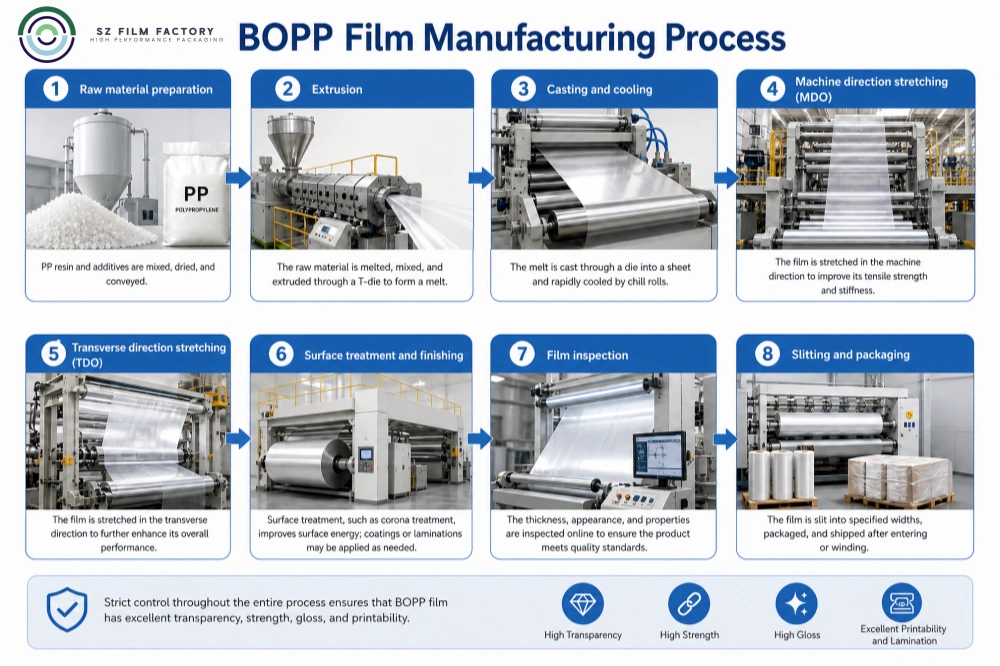
The Complete BOPP Film Production Process
The BOPP film manufacturing process includes several important stages, from resin melting to final packaging.
The main production steps are:
- Raw material preparation
- Extrusion
- Casting and cooling
- Machine direction stretching (MDO)
- Transverse direction stretching (TDO)
- Surface treatment and finishing
- Film inspection
- Slitting and packaging
Each step affects the final quality of the BOPP film.
Step 1: Raw Material Preparation
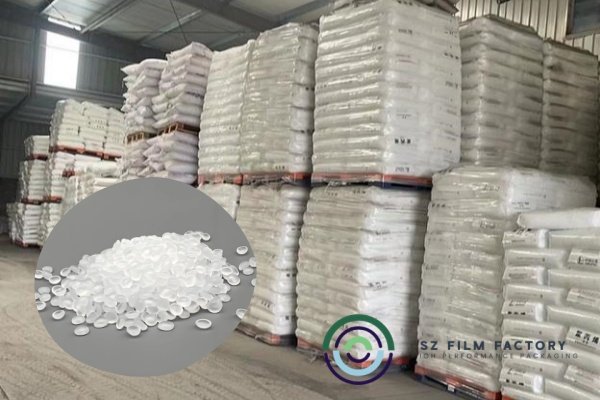
The production starts with high-quality polypropylene resin preparation.
Polypropylene pellets are the main material used in BOPP film production. Manufacturers may also add different functional additives depending on the required film performance.
For example, different additives can improve:
- Surface feeling
- Printing performance
- Heat sealing ability
- Transparency
- Anti-static performance
The material formula is carefully controlled because it directly influences the final film properties.
Step 2: Extrusion Creates the Initial Film Layer
Extrusion is the first major production stage where polypropylene becomes a molten film.
During extrusion, polypropylene pellets enter the extruder and are heated until they become a uniform melt. The molten material is then pushed through a flat die to form a continuous sheet.
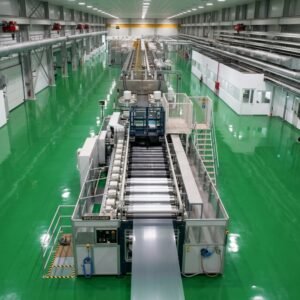
Temperature control is critical during this stage.
If the temperature is too low, the material may not flow evenly. If the temperature is too high, polymer degradation may happen and affect film quality.
A stable extrusion process helps create a film with:
- Even thickness
- Smooth surface
- Better mechanical performance
Need customized BOPP film for your application? Contact Shunzhan New Materials for professional film solutions.
Step 3: Casting and Cooling Stabilize the Film Structure
The casting process quickly cools the molten polypropylene sheet into a stable film layer.
After leaving the die, the hot film is placed onto a cooling roller. The rapid cooling process helps form a uniform structure before stretching.
The cooling speed affects:
- Film transparency
- Thickness uniformity
- Internal structure
A well-controlled casting process creates a strong foundation for the following stretching steps.
Step 4: Machine Direction Stretching Improves Film Strength
Machine direction stretching expands the film lengthwise and improves molecular orientation.
In this stage, the cooled sheet passes through heated rollers. The rollers stretch the film along the production direction.
This process helps improve:
- Tensile strength
- Film toughness
- Thickness control
The stretching ratio and temperature must be carefully adjusted. Incorrect settings may cause uneven stretching or film breakage.
Step 5: Transverse Direction Stretching Completes Biaxial Orientation
Transverse stretching stretches the film across its width and completes the BOPP structure.
The film enters a tenter frame where clips hold both sides of the film. The width gradually increases while the film passes through controlled heating zones.
This stage creates the key characteristics of BOPP film:
- High strength
- Good dimensional stability
- Excellent clarity
- Balanced performance
The combination of machine direction stretching and transverse direction stretching is why BOPP film has superior properties compared with standard polypropylene film.
Step 6: Surface Treatment Improves Film Performance
Surface treatment improves the ability of BOPP film to bond with inks, coatings, and adhesives.
Because polypropylene has a naturally low surface energy, untreated BOPP film can be difficult to print or laminate.
Manufacturers usually use processes such as corona treatment to increase surface energy.
After treatment, the film can achieve better:
- Printing quality
- Adhesion
- Coating performance
For special applications, Shunzhan New Materials also provides functional BOPP films including soft touch film, anti-scratch film, and anti-fingerprint film.
Step 7: Film Inspection Ensures Product Quality
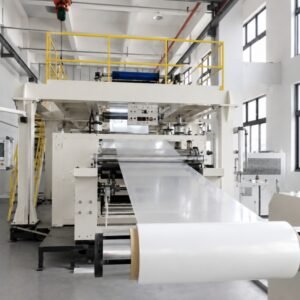
Quality inspection guarantees that every roll meets customer requirements.
During production, manufacturers check important factors such as:
- Film thickness
- Transparency
- Surface quality
- Tensile strength
- Appearance defects
Advanced inspection systems help detect problems quickly and maintain stable product quality.
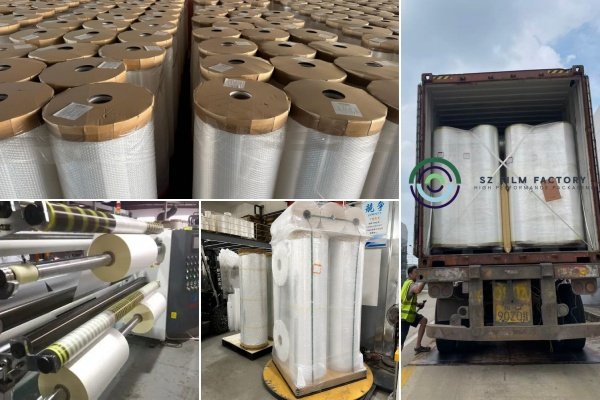
Step 8: Aging, Slitting, and Packaging Prepare the Final Product
The final processing stage includes aging, slitting, and packaging.
After production, BOPP film normally needs a stabilization period before final use. This allows internal stress to decrease and improves performance consistency.
Then the large film rolls are:
- Cut into required widths
- Inspected again
- Packed for shipment
The finished BOPP film is now ready for customers in different industries.
Why Choosing the Right BOPP Film Manufacturer Matters
A reliable manufacturer controls every production stage to deliver consistent film quality.
A professional BOPP film supplier should have:
- Advanced production equipment
- Stable raw material control
- Strict quality inspection
- Customization capability
- Technical support
Shunzhan New Materials focuses on BOPP and PET film manufacturing. We help customers develop functional films for different market needs, including packaging, decoration, and protective applications.
Looking for customized BOPP or PET film solutions? Get in touch with our technical team today.
Common Questions About BOPP Film Production
What material is used to make BOPP film?
BOPP film is mainly made from polypropylene resin. Additional additives can be added to improve specific functions and performance.
Why is BOPP film stretched?
Biaxial stretching improves the film’s strength, transparency, and dimensional stability.
Is BOPP film recyclable?
BOPP film is a polypropylene-based material and can be recycled in suitable recycling systems.
What makes high-quality BOPP film different?
High-quality BOPP film depends on stable raw materials, precise production control, advanced equipment, and strict inspection processes.
Choose Shunzhan New Materials for High-Performance BOPP Film Solutions
Shunzhan New Materials provides professional BOPP and PET film manufacturing services with a focus on quality, customization, and functional innovation. Our product range includes soft touch film, anti-scratch film, anti-fingerprint film, and three-in-one multifunctional films designed for different applications.
If you need customized BOPP film solutions, please contact us at info@szfilmfactory.com. You can also click Свяжитесь с нами or Get a Quote to submit your requirements through our online form. Customers who want to learn more about our production capabilities are welcome to visit our factory and see our BOPP film manufacturing process in person.
We look forward to working with you on your next film project.