
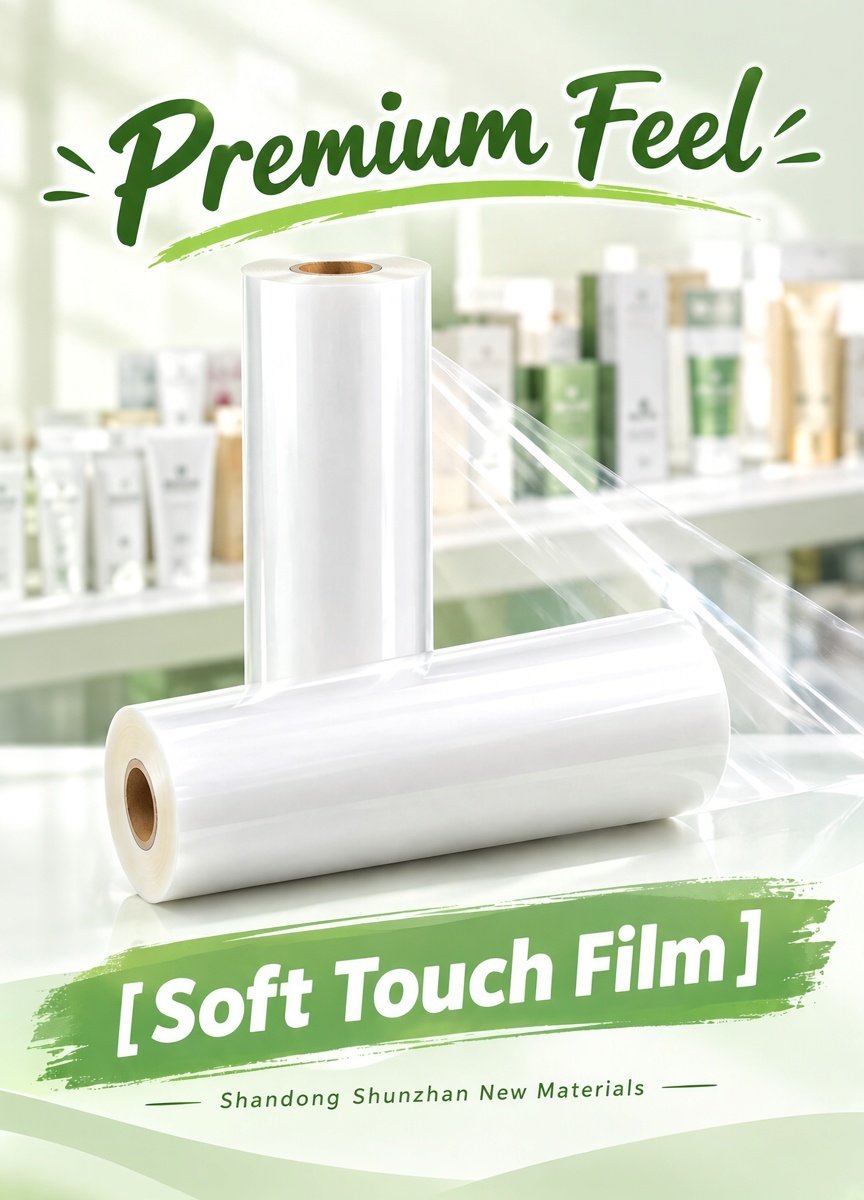
Soft Touch Film and Matte Film create different packaging experiences: Soft Touch Film adds a soft, velvet-like feel, while Matte Film mainly creates a low-gloss, non-reflective surface. Both are widely used for premium packaging, but they serve different design and performance goals. Soft Touch is often chosen when touch and luxury feel matter. Matte is a practical choice when the main goal is a clean, low-glare appearance.
Soft Touch Film vs. Matte Film: Quick Comparison
The main difference is tactile feel. Matte Film changes how the surface looks, while Soft Touch Film changes both how it looks and how it feels.
| Feature | Soft Touch Film | Matte Film |
|---|---|---|
| Surface look | Deep matte, premium | Matte, low-gloss |
| Hand feel | Soft, smooth, velvet-like | Smooth, standard film feel |
| Gloss | Very low | Low |
| Fingerprint resistance | Available in anti-fingerprint grades | Depends on film grade |
| Scratch resistance | Available in enhanced grades | Depends on film grade |
| Premium feel | Very high | High |
| Typical use | Luxury and high-end packaging | General premium packaging |
In simple terms: choose Soft Touch for the experience, and Matte for the appearance. A Soft Touch surface is usually matte, but a standard Matte Film does not automatically provide a soft-touch effect.
What Is Soft Touch Film?
Soft Touch Film is a functional packaging film designed to create a soft and velvety surface. It is commonly used on printed cartons, boxes, book covers and other products where consumers directly touch the package.
The surface usually has a deep matte appearance with low reflection. Its key difference is the tactile effect. When customers hold the package, the surface feels smoother and softer than a standard matte finish.
This makes Soft Touch Film suitable for cosmetic boxes, perfume packaging, gift boxes, luxury products and premium electronics packaging.
For projects where touch is part of the brand experience, Soft Touch BOPP Film can be a strong option.
What Is Matte Film?
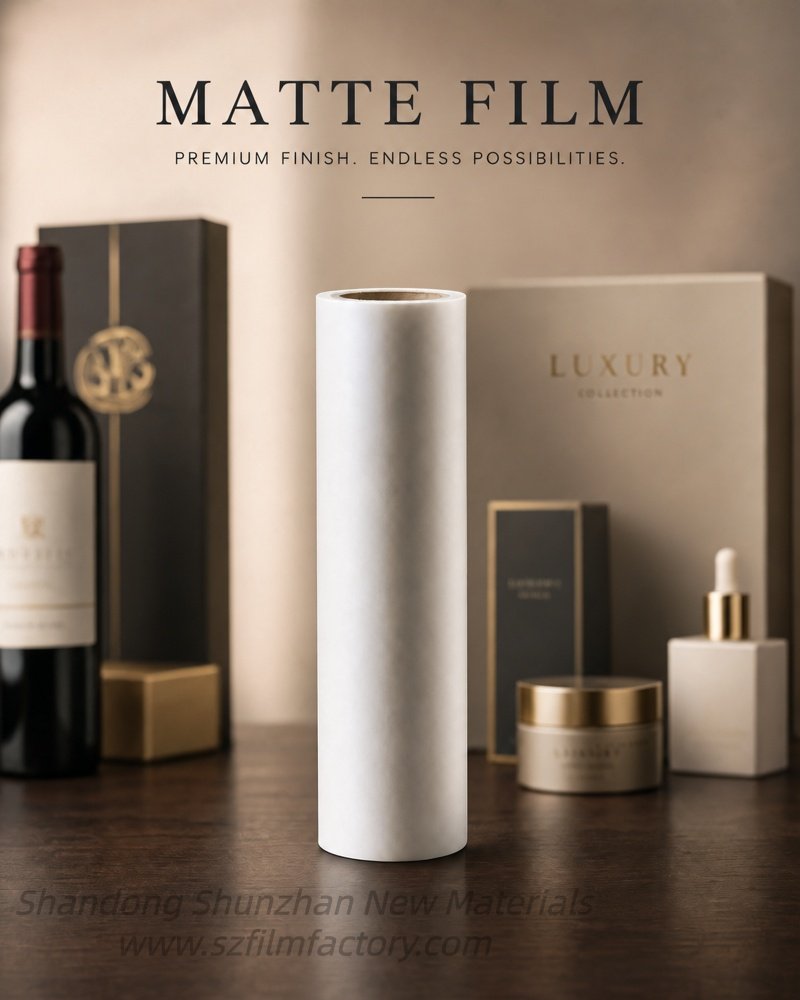
Matte Film is mainly designed to reduce surface reflection and create a soft, low-gloss appearance. It gives packaging a clean and modern visual effect without the strong reflection of glossy film.
Matte Film can work well with minimalist graphics, dark colors, text-heavy designs and premium cartons. It is also useful when glare needs to be controlled under retail lighting.
However, standard Matte Film does not necessarily have the velvet-like hand feel of Soft Touch Film.
Soft Touch vs. Matte: Hand Feel
Soft Touch Film has the stronger tactile effect. Its surface is designed to feel soft, smooth and slightly velvety.
Matte Film usually feels like a normal smooth film. It can look premium, but it does not necessarily create the same sensory experience.
This difference matters for products that customers are likely to hold before buying. Cosmetics, perfume, jewelry, gift boxes and premium electronics are good examples.
Soft Touch vs. Matte: Gloss Level
Both films reduce reflection, but Soft Touch Film is often designed for a deeper matte effect. The exact gloss level depends on the film construction and surface treatment.
For example, some Soft Touch BOPP grades can reach very low gloss levels. One current Soft Touch BOPP specification lists a 60° surface gloss of ≤8 GU.
The best approach is to approve the surface using a physical sample rather than choosing a film only by its product name.
Which Film Is Better for Fingerprint Resistance?
Anti-fingerprint performance depends on the surface formulation, not simply on whether the film is Soft Touch or Matte. Dark packaging can show fingerprints and oily marks more easily, so an anti-fingerprint grade can be useful for products that receive frequent handling.
Soft Touch Film can also be combined with an anti-fingerprint function. This creates a package that feels premium while helping the surface stay cleaner during handling.
For dark cosmetic boxes, electronics packaging and luxury gift boxes, consider Soft Touch Anti-Fingerprint Film.
Which Film Is More Scratch Resistant?
Neither Soft Touch nor standard Matte Film should be treated as automatically scratch-proof. Scratch resistance depends on the surface coating, film structure, processing conditions and test method.
If the package will face frequent rubbing, stacking or transport, a scratch-resistant film may be more suitable. Soft Touch and anti-scratch functions can also be combined in selected film structures.
For high-volume packaging, we recommend testing the actual printed carton before mass production.
Which Film Should You Choose for Packaging?
The right film depends on the packaging experience you want to create.
Phone Boxes
Choose Soft Touch when the phone box needs a premium tactile experience. The soft surface can support a clean, minimalist design and make the box feel more refined.
For dark colors, an anti-fingerprint or scratch-resistant option can also be considered.
Cosmetic Boxes
Soft Touch Film is a strong choice for cosmetic packaging because both appearance and touch are important. It works well with minimalist artwork, black packaging, pastel colors and premium branding.
If the box will be handled frequently, consider a Soft Touch Film with additional anti-fingerprint or scratch-resistant performance.
Wine Boxes
Matte Film works well for wine packaging when the goal is an elegant and understated appearance. Soft Touch Film is suitable when the brand wants a stronger luxury experience.
Soft Touch can work particularly well with premium gift boxes, dark colors, foil details and restrained graphic designs.
Luxury Packaging
Soft Touch Film is usually considered when tactile branding is a key part of the package. It adds another sensory layer beyond color, printing and structural design.
Matte Film is a good alternative when the brand wants a refined appearance without making the tactile effect the main feature.
Soft Touch Film or Matte Film: How to Decide
Start with the main packaging goal instead of the film name.
- Want a velvet-like hand feel? → Choose Soft Touch Film.
- Want a simple low-gloss appearance? → Choose Matte Film.
- Need better fingerprint resistance? → Consider an anti-fingerprint grade.
- Need better protection against scuffs? → Consider scratch-resistant film.
- Need several functions together? → Consider a multifunctional film.
- Creating luxury cosmetic or gift packaging? → Soft Touch is worth evaluating.
- Creating a clean, modern carton? → Matte Film may be sufficient.
The final choice should also consider printing, lamination, foil stamping, UV finishing, die cutting and the actual handling conditions of the package.
Soft Touch and Matte Film Manufacturer
Shandong Shunzhan New Materials produces high-quality Soft Touch Film and Matte Film for packaging applications. We focus on BOPP and PET film solutions and can provide films for different packaging and converting requirements.
Our product range also includes Soft Touch Film, Anti-Scratch Film, Anti-Fingerprint Film and multifunctional films that combine multiple surface functions.
If you are comparing Soft Touch and Matte Film for a new packaging project, we can help you select the right film structure and specification based on your application.
Looking for Soft Touch or Matte Film for your packaging project? Contact Shandong Shunzhan New Materials at info@szfilmfactory.com to discuss your requirements.
FAQ
Can Soft Touch Film be used for food packaging?
It can be used in suitable packaging structures, but the complete construction must meet the requirements of the intended food application. Film selection should consider the substrate, ink, adhesive and applicable regulations.
Is Soft Touch Film more expensive than Matte Film?
Soft Touch Film can cost more because its surface is specially engineered to provide a tactile effect. The actual price depends on film thickness, width, structure, surface treatment, order volume and other specifications.
Can Matte Film be used with hot foil stamping?
Matte surfaces can be used with hot foil stamping, but compatibility should be tested with the specific film and finishing process. Adhesion and surface characteristics can affect the final result.
Can Soft Touch Film be laminated to paperboard?
Yes, Soft Touch BOPP Film is commonly used for laminated printed paper and paperboard packaging. The correct adhesive, lamination temperature and production conditions should be selected for the specific structure.
Does Soft Touch Film change printed colors?
It can change the visual appearance of printed colors because its matte surface scatters light. Dark colors may appear softer and less reflective compared with a glossy surface. A production sample is recommended for color approval.
Can Soft Touch Film and Anti-Fingerprint Film be combined?
Yes, some film structures combine soft-touch and anti-fingerprint functions. This combination is useful when both tactile quality and a clean surface are important.
What information should I provide when requesting a film quotation?
The most useful information includes film type, thickness, width, application, printing method, lamination process and expected order quantity. If you have a finished packaging sample or technical specification, sharing it can make film selection easier.
Is BOPP or PET better for Soft Touch Film?
Neither material is universally better; the choice depends on the packaging structure and performance requirements. BOPP is widely used for packaging lamination, while PET can offer different mechanical and thermal properties. The final choice should be based on the complete application rather than the film name alone.
Need help choosing between Soft Touch Film and Matte Film? Contact Shandong Shunzhan New Materials for a suitable BOPP or PET film solution.