
BOPP Film Defect Quick Diagnosis
The first diagnosis should focus on the equipment or process area most likely to create a continuous line.
| BOPP Film Defect | First Check | Second Check | Third Check |
|---|---|---|---|
| Fish Eyes / Gel Defects | Extrusion Temperature | Filter Screen | Raw Material / Recycled Material |
| Thickness Variation | Die Gap | Chill Roll Temperature | Stretching Temperature |
| Streaks | Die Lip | Chill Roll | Stretching Roll Cleanliness |
| Low Corona Level | Corona Power | Slip Additive Migration | Storage Time |
| Stretching Break | Stretching Temperature | Stretch Ratio | Raw Material / Contamination |
| High Haze | Chill Roll Cooling | Stretching Temperature | Heat Setting Temperature |
| High Shrinkage | Heat Setting | Stretch Ratio | Winding Tension |
| Slip Additive Migration | Additive Level | Storage Temperature | Storage Time |
This table is a quick reference for the wider BOPP common defect topic. This page focuses on streaks in BOPP film.
What Are Streaks in BOPP Film?
BOPP film streaks are usually long, continuous bright or dark lines that run in the machine direction. They may become more visible when the film is viewed under direct light or against a contrasting background.
A streak does not always mean that the film is simply too thick or too thin. It can also come from a difference in surface shape, cooling, crystallinity or optical behavior.
The position and pattern of the streak can provide an important clue. A straight line that remains in the same position across the roll may point to a fixed production source such as the die or a roller.
What Causes Streaks in BOPP Film?
The main causes include die lip damage, roller defects, contamination and uneven cooling. Different causes require different corrective actions.
1. Die Lip Problems
The die lip is one of the first areas to inspect when a streak appears continuously in the machine direction. A scratch, small notch, deposit or carbonized material on the die lip can disturb polymer flow.
The flow disturbance can create a line in the cast sheet. After stretching, the original line may become more visible on the finished BOPP film.
Die cleanliness and surface condition therefore have a direct impact on film appearance.
2. Chill Roll Damage
A scratch or surface defect on the chill roll can transfer a line to the cast sheet. Because the roller rotates continuously, the defect can create a repeated longitudinal mark.
The problem can become more visible after biaxial stretching. A small mark on the cast sheet may become a clear optical streak in the final film.
The chill roll surface should be checked when the streak has a regular and stable position.
3. Stretching Roll Contamination
Material deposits or damage on a stretching roll can create visible lines on the film. Contamination may change the contact between the film and the roll.
A dirty roll can also affect surface quality and local film behavior. Regular inspection and cleaning can help prevent these defects.
4. Uneven Cooling
Uneven cooling can create differences in the film structure and optical properties. If different parts of the cast sheet cool at different rates, the resulting crystallinity may vary across the web.
These differences can appear as bright or dark optical bands. The defect may be more noticeable in transparent or high-clarity film.
5. Material Contamination
Foreign material or accumulated residue can disturb polymer flow and create a continuous material line. Contamination may build up around the die and become a repeated defect during production.
This is why material cleanliness and stable extrusion conditions matter for visual film quality.
How to Quickly Diagnose BOPP Film Streaks
The easiest way to diagnose a streak is to study its direction, position and consistency before changing process settings.
Check 1: Inspect the Die Lip
Check for scratches, deposits, notches or carbonized material. This is especially important when the streak starts directly after the die and remains in a fixed position.
Check 2: Inspect the Chill Roll
Check the roll surface for scratches, deposits and other physical damage. Compare the position of the streak with the roller condition.
Check 3: Check Stretching Rolls
Inspect the stretching rolls for contamination or surface damage. Cleaning and inspection can help identify a downstream source.
Check 4: Review Cooling Conditions
Check whether cooling is uniform across the film width. Differences in temperature can create optical variation and streak-like patterns.
Check 5: Review Raw Material and Extrusion
Check for contamination, material changes and die build-up when the equipment appears normal. A material-related problem may create repeated lines through disturbed melt flow.
How Streaks Affect Packaging Lamination
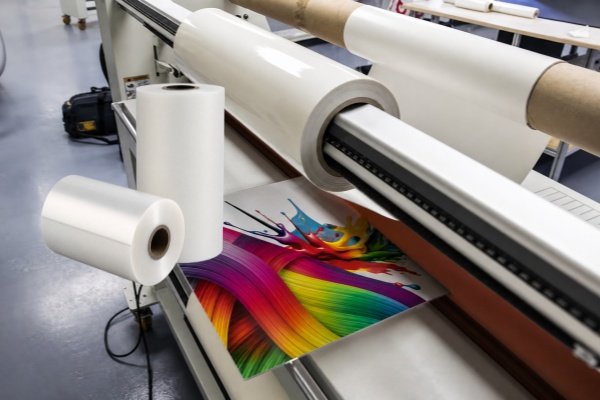
Streaks can become highly visible after packaging lamination because differences in optical appearance may remain noticeable through the finished structure. This is especially important for clear and high-appearance packaging films.
A visible streak can reduce the uniform appearance of the laminated packaging. Even when the film still has acceptable mechanical properties, the finished package may show a line that is easy to notice under light.
Streaks may also affect coating and surface treatment uniformity. If the defect is associated with a local surface irregularity, it can make downstream coating or lamination more difficult to control.
The problem can be more serious when the film is used as a functional or decorative layer.
For packaging lamination, controlling streaks at the BOPP film stage helps reduce downstream rejection and rework.
Need a clean, uniform BOPP film surface for packaging lamination? Contact Shunzhan New Materials to discuss your film structure and application requirements.
How to Prevent Streaks in BOPP Film
Streak prevention starts with clean equipment, stable cooling and controlled extrusion conditions.
Keep the die lip clean and in good condition. Remove deposits before they develop into continuous flow marks.
Maintain the chill roll surface. Regular inspection can help identify scratches or material build-up early.
Keep stretching rolls clean. Deposits can create repeated marks and reduce surface consistency.
Monitor cooling uniformity. A stable temperature profile helps reduce optical differences across the film.
Control material cleanliness. Good raw material management reduces the risk of contamination and die build-up.
Use continuous quality inspection. Early detection helps isolate the affected section before a larger amount of film is produced.
Shunzhan New Materials: Full-Process Film Quality Control
At Shunzhan New Materials, quality inspection is carried out throughout production to control film appearance and performance. We specialize in BOPP and PET films for different functional and converting applications.
Products with identified quality defects are not released to the market. This helps protect customers from receiving film that may cause problems during coating, printing, lamination or other downstream processing.
Our product range includes functional film solutions such as soft-touch film, anti-scratch film, anti-fingerprint film, heat-sealable film, pearlized film and multifunctional films. Product selection can be adjusted according to the required surface effect and application.
Need BOPP film for packaging lamination or a functional surface application? Send your requirements to info@szfilmfactory.com for product and specification support.
FAQ About BOPP Film Streaks
Are streaks always caused by the die?
No. Die lip problems are one possible cause, but streaks can also come from the chill roll, stretching rolls, cooling conditions or material contamination.
Why are some streaks bright while others are dark?
The visual effect depends on how the defect changes light transmission or reflection. Differences in thickness, surface structure, crystallinity or orientation can create different optical effects.
Can a streak disappear after coating?
It depends on the cause and the coating structure. Some defects may become less visible, while others may remain visible or become more noticeable after coating or lamination.
Are streaks more serious in transparent BOPP film?
They can be. Transparent film makes optical differences easier to see, especially under strong or directional lighting.
Can streaks be caused by raw materials?
Yes. Contamination or material build-up can disturb melt flow and create continuous lines, although equipment-related causes should also be checked.
Does a chill roll scratch affect the whole film roll?
It can create a repeated defect over a large amount of film when the scratch remains in contact with the cast sheet. The actual affected length depends on the production conditions and when the defect is identified.
Can streaks affect packaging appearance?
Yes. A continuous bright or dark line may remain visible after lamination and can reduce the visual uniformity of the finished packaging.
What information should buyers provide when reporting a BOPP streak defect?
Photos, defect position, roll number, machine direction, defect width and whether the line repeats at a fixed position are useful details. This information can help a film supplier identify the possible production source more efficiently.