
Foil stamping can fail after BOPP lamination because the foil is no longer bonding to paper or ink; it is bonding to a treated plastic film surface, and that surface must be compatible with the foil stamping process. In this phone box case, the customer used a common packaging structure: printed paper, BOPP film lamination, and a gold foil logo. The box looked good after lamination, but the logo later showed incomplete foil transfer, weak adhesion, and peeling around fine details.
The problem was not simply the stamping machine.
The key issue was the compatibility between the laminated BOPP surface, the foil, and the hot stamping conditions.
This is a common challenge in premium packaging because the final surface must provide both a high-end appearance and reliable performance during post-lamination finishing.
The Customer’s Packaging Structure
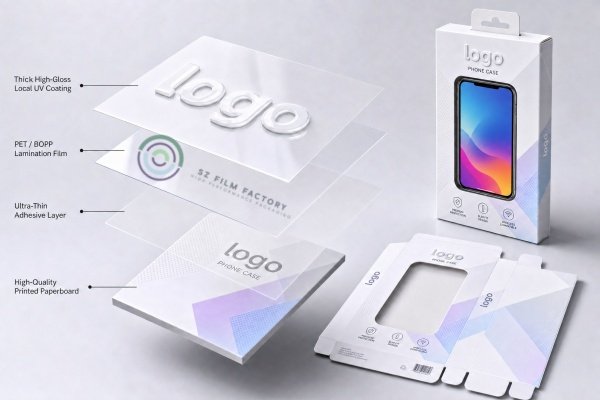
The customer’s phone box used a typical premium packaging structure with a decorative foil logo added after lamination.
The production process was approximately:
Paper → Printing → BOPP Film Lamination → Foil Stamping → Die Cutting and Folding
The customer chose BOPP film to protect the printed graphics and create a premium surface.
The next step was hot stamping a gold logo.
At first, this seemed like a standard packaging process.
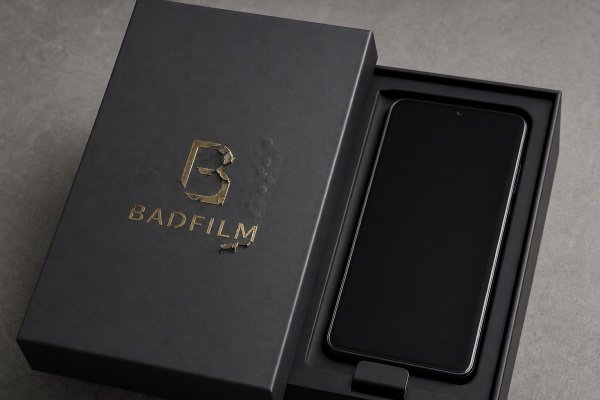
However, the customer began to see defects in the foil-stamped logo.
The Main Defects
The most visible defects appeared in the areas where the gold foil needed to bond to the laminated surface.
The customer reported several issues:
- Incomplete foil transfer
- Small missing areas in the logo
- Poor adhesion
- Foil peeling after scratching
- Uneven edges on fine logo details
- Reduced metallic appearance
- Different stamping results between production batches
These defects were especially obvious because the phone box was positioned as a premium product.
A small defect on a large carton may be easy to ignore, but a defective logo on a luxury phone box can immediately affect the perceived quality of the product.
Why Did the Problem Appear After BOPP Lamination?
The most important change happened when the printed paper surface became a BOPP film surface.
Before lamination, the printing ink sits directly on the paper.
After lamination, the outer surface is BOPP.
This changes the surface properties of the packaging.
BOPP is a polyolefin material with relatively low surface energy. Its surface needs suitable treatment when strong adhesion is required.
This is why the same foil and stamping machine may work well on one material but poorly on another.
The foil does not simply “stick to the box.” It must form a suitable bond with the actual surface that receives the stamping.
In this case, that surface was BOPP.
Foil Stamping Adhesion Failure
The problem in this case can be described as foil stamping adhesion failure or poor foil adhesion after lamination.
In packaging production, several related terms may be used:
- Foil stamping defects
- Poor foil adhesion
- Foil transfer failure
- Poor foil release and transfer
- Post-lamination foil stamping failure
- Foil peeling
- Hot stamping adhesion failure
What Causes Foil Stamping Defects After BOPP Lamination?
The problem usually comes from a combination of surface properties, foil compatibility, and stamping conditions rather than one single factor.
1. The BOPP Surface Has Low Surface Energy
Low surface energy can make it difficult for the foil adhesive layer to achieve strong contact with the film surface.
Untreated polypropylene has poor adhesion characteristics for many coating and adhesive systems.
That is why BOPP film is normally surface-treated during production.
However, treatment quality and stability are important.
A film may look excellent but still have insufficient surface performance for a demanding finishing process.
For post-lamination foil stamping, appearance alone is not enough.
The film must provide a surface that is suitable for the foil system.
2. The Film and Foil Are Not Compatible
The BOPP film and hot stamping foil must be selected as a system.
Different foils use different adhesive layers.
Some are designed for paper.
Some are designed for coated surfaces.
Others are developed for plastic films or specially treated surfaces.
If a standard foil is used on a laminated BOPP surface without checking compatibility, transfer can become unstable.
The result may be incomplete stamping or poor adhesion.
This is why changing the foil alone may not solve the problem if the film surface is the real weak point.
3. The Stamping Temperature Is Not Correct
Hot stamping requires the correct balance of temperature, pressure, and dwell time.
If the temperature is too low, the foil adhesive may not activate correctly.
If the temperature is too high, the film may be affected by heat.
Excessive heat can cause surface deformation, film shrinkage, or other appearance problems.
The correct temperature also depends on the foil, film, machine, stamping speed, and pressure.
There is no single temperature that works for every BOPP film and every foil.
This is why production trials are important.
4. Stamping Pressure and Dwell Time Matter
Correct pressure helps the foil make uniform contact with the laminated surface.
Too little pressure can result in incomplete transfer.
Too much pressure may damage fine details or create unwanted impressions.
Dwell time also affects the result.
A premium logo may contain very small text or thin lines. These details require stable pressure and heat transfer.
The smaller the logo details, the more sensitive the process becomes.
5. Matte and Soft-Touch Surfaces Can Be More Demanding
Premium matte and soft-touch surfaces can require more careful foil stamping control than standard glossy surfaces.
This is important for premium phone boxes.
Many brands want a soft and luxurious surface combined with a bright gold or silver logo.
The visual contrast is attractive:
Soft matte surface + bright metallic logo
But the combination also creates a more demanding finishing process.
The film surface must provide the required tactile effect while still supporting the decorative process.
This is why a soft-touch BOPP film designed for premium finishing can be a better option than a standard matte film.
How We Analyzed the Phone Box Case
We first looked at the entire production structure instead of blaming the foil stamping machine.
The analysis should include:
Paper → Ink → Lamination Adhesive → BOPP Film → Foil → Stamping Conditions
Each layer can affect the next one.
We would check:
Film Surface
The film surface must have suitable treatment and uniformity for the intended finishing process.
Important factors include surface treatment, surface energy, surface uniformity, and film quality.
Lamination Quality
The BOPP film must be firmly bonded to the printed substrate before foil stamping begins.
Poor lamination can create another weak interface.
Ink Condition
The printing ink must be sufficiently dry or cured before lamination.
Heavy ink coverage can affect the bonding between the printed surface and the film.
Foil Compatibility
The foil should be suitable for the actual laminated surface.
A foil designed for paper is not automatically suitable for BOPP.
Stamping Parameters
Temperature, pressure, speed, and dwell time must be tested with the actual film and foil combination.
This is why laboratory testing and production trials are more reliable than simply copying settings from another project.
The Solution: Start With the Right BOPP Film
The most effective solution is to select the BOPP film according to the complete finishing process from the beginning.
For a phone box that requires:
Printing → BOPP Lamination → Foil Stamping
the film should be evaluated for both lamination performance and post-lamination finishing.
This is where high-performance packaging film can make a difference.
A suitable film should provide:
- Stable surface treatment
- Good lamination compatibility
- Uniform surface quality
- Suitable adhesion characteristics
- Good heat resistance for the intended process
- Good scratch resistance when required
- Compatibility with the customer’s finishing process
The goal is not simply to make the film stick to paper. The goal is to make the complete packaging process work.
Shunzhan New Materials: BOPP Film for Premium Packaging
Shunzhan New Materials develops BOPP and PET films for applications where surface performance and premium appearance are both important.
For premium phone boxes and consumer electronics packaging, our BOPP film portfolio includes options such as:
- Touch / Soft-Touch BOPP Film
- Scratch-Resistant BOPP Film
- Anti-Fingerprint BOPP Film
- Multi-Functional BOPP Film
These film solutions can be selected according to the customer’s required surface effect and finishing process.
For example, a premium phone box may need a soft-touch surface but also need good resistance to fingerprints and scratches.
A multi-functional film can be considered when several surface requirements need to be combined.
For packaging that requires foil stamping after lamination, film selection should also consider the compatibility of the laminated surface with the customer’s foil and stamping process.
Why High-Quality Film Matters in a Premium Phone Box
A small foil defect can become a major quality problem when the package represents a premium electronic product.
Consider a gold logo on a black or dark matte phone box.
The design may be simple.
The logo may only occupy a small part of the box.
But customers notice it immediately.
If the gold foil is incomplete, scratched, or peeling, the packaging can look cheap even if the printing and paper are excellent.
This is why premium packaging needs more than good printing.
Every layer must support the final visual effect.
How to Prevent Foil Stamping Problems in Future Projects
The best way to prevent foil stamping defects is to test the complete material combination before mass production.
A practical trial should include:
- The actual paper
- The actual printing ink
- The proposed BOPP film
- The actual lamination process
- The actual hot stamping foil
- The actual stamping machine
- The planned stamping conditions
Then test the finished sample.
Recommended Quality Checks
A complete test should evaluate both appearance and adhesion.
Check:
- Foil transfer
- Foil adhesion
- Scratch resistance
- Tape adhesion
- Fine logo details
- Edge definition
- Surface appearance
- Folding performance
- Die-cutting performance
- Storage stability
Testing the complete structure is much more useful than testing the BOPP film by itself.
A Simple Rule for Packaging Manufacturers
If a phone box needs foil stamping after BOPP lamination, do not select the film based only on its matte, glossy, or soft-touch appearance.
Ask three questions before production:
1. Is the film suitable for the required lamination process?
2. Is the laminated surface suitable for post-lamination foil stamping?
3. Has the actual film + foil combination been tested under production conditions?
If the answer to these questions is yes, the risk of foil transfer problems can be significantly reduced.
If you are currently testing a new phone box design, send us the structure and finishing requirements. Shunzhan New Materials can help you evaluate a suitable BOPP film before mass production.
Case Study Conclusion
The root of post-lamination foil stamping failure is often not the stamping machine alone; it is the compatibility between the BOPP surface, foil adhesive, and production conditions.
In this type of premium phone box, BOPP changes the surface that receives the gold logo.
That means the film becomes part of the hot stamping system.
If the film has unsuitable surface properties, unstable treatment, or poor compatibility with the foil, defects such as incomplete transfer, weak adhesion, and peeling may occur.
The solution is to select the film and foil as a complete system and verify the result through actual production testing.
For premium packaging, the best film is not simply the film that looks good after lamination.
It is the film that continues to perform well through the next process.
If your phone box or consumer electronics packaging has experienced foil stamping defects after BOPP lamination, contact Shunzhan New Materials at info@szfilmfactory.com or use our contact form to discuss your application and request a suitable film solution.
Tell us your paper, printing method, BOPP film requirement, foil type, and finishing process. We can help you find a film solution designed for the complete packaging process—not just the lamination step.
You are also welcome to visit our factory if you would like to discuss your packaging project and film requirements with our team.